


Disability Funding Cuts Are Hurting
March 18th, 2024 is a date etched in the minds of the disability community: the day the clocks were wound back on flexible funding.
For the past 14 years the disability sector has been supported by Enabling Good Lives (EGL). This service has been giving disabled people a choice in how they use their funding, to make decisions about their lives. However in March last year, there was a sudden and unexpected announcement via the Whaikaha (Ministry of Disabled people) Facebook page.
No warning, no consultation had been given regarding this announcement, which contained changes to flexible funding and purchasing rules in order to balance the finances – without taking into account the needs of disabled people. The mahi of the last 14 years has been dialled back, and, the trust of disabled people has been eroded.
The disability sector was enraged when the then Minister for Disability Issues, Penny Simmonds claimed that carers had been taking advantage of the flexible funding to use public money “for massages, overseas travel, pedicures, haircuts” for themselves, rather than the money going to disabled people.
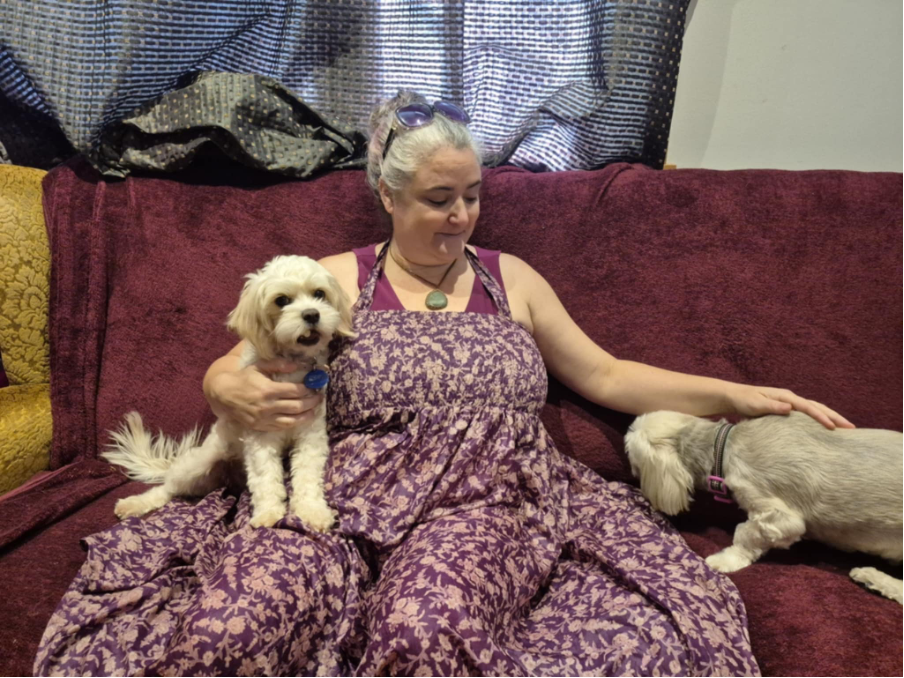
Dani Ella has a hidden disability, “I’m neuro divergent,” and felt lucky to be in employment. According to the latest statistics from the Ministry of Business, Innovation and Employment, in 2024, disabled people were 40 percent more likely to be unemployed, than their able-bodied counterparts. While 80.3 percent of able-bodied New Zealanders aged between 15 and 64 are in employment, for disabled people, this figure is 39.9 per cent. Ella worked in an autism and disability team for Te Pou. However, due to the funding cuts to frontline services, she and her team lost their jobs, causing significant financial and emotional distress.
Not having work took an emotional toll, especially as she was the only one in her household in paid employment. “For my family, the three months when I didn’t have work .. were terrifying.” To make ends meet, Ella did whatever she could to get paid work: from mystery shopping, to dog sitting to babysitting for Oranga Tamariki. Ella’s optimism is evident as she states that there was a silver lining: before losing her job, she was the one that people leaned on. “It forced me to reset my values and accept mutual support.”
Ella is now a support worker, lending her support to other people living with disabilities who are also struggling with the funding cuts. She is very clear about what the disabled community needs: “We’ve known the answer for a long time: It’s Enabling Good Lives. We don’t need more consultation and brainstorming. We just need the solution reinstated.”
The trigger for the Government’s freeze on funding and cuts to flexible funding was a forecasted overspend of $50 to $60 million in the DSS (Disability Support Services) budget. What impact has this had on day-to-day life for people with disabilities?
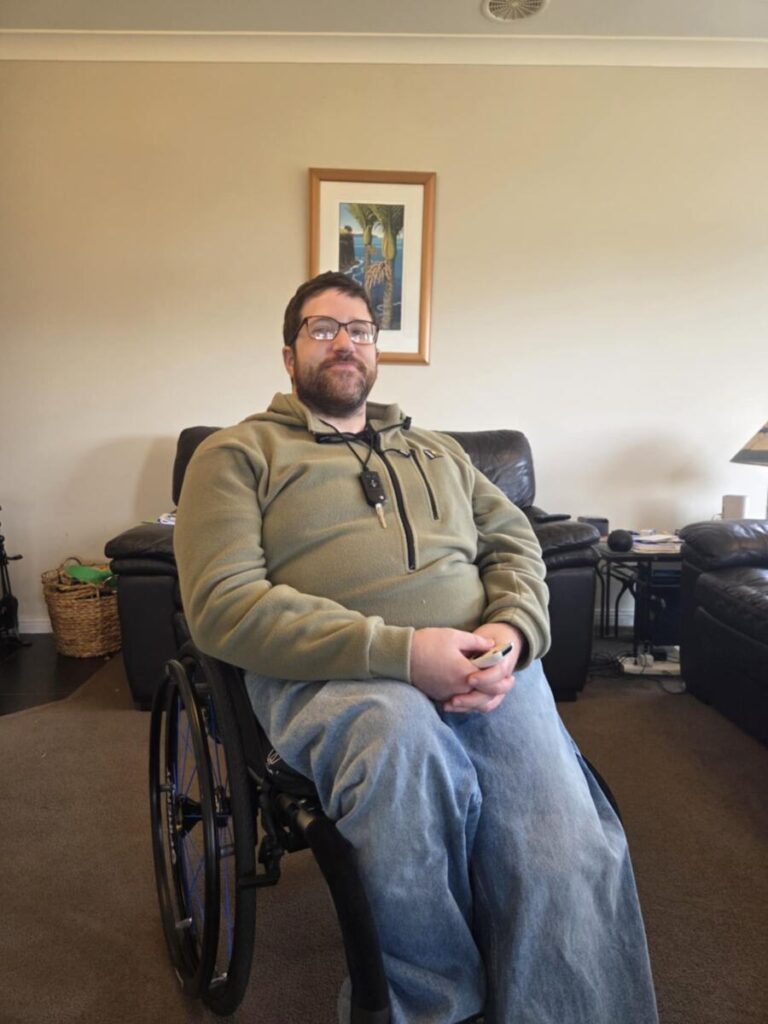
Ollie Goulden, a wheelchair user due to spina bifida, says recent funding cuts have affected the amount of support he can receive and what he can use it for. His budget has been cut by 15 per cent. This presents a problem as according to Goulden, “I can’t use the funding for paying for food and accommodation for my support workers, which makes it a lot harder for me to travel for work.”
When the cuts were announced on the 18th March, Goulden had just started working at My life My Voice, an organisation which helps disabled people to connect with community groups. In addition to this, it runs a peer support programme, along with providing other resources. These cuts, coinciding with the start of his new job, made him anxious about how they were going to affect his work and social life. He praised his employers for doing all they can to alleviate the stress the funding cuts have had on him.
Attaining employment is already a challenge for people in the disabled community and the cuts to funding have increased the barriers for a number of people like Ollie, “It makes it a lot harder for me to travel for work.”
A guiding principle of EGL is that disabled people are supported to live in their communities with opportunities for learning, employment, home, family and social participation, just like the able-bodied at similar life stages. Having to choose between day-to-day needs or socialising out in the community has been a significant challenge for Goulden. Forced to lean on his friends for support has changed the dynamics of his relationships with them as they are filling the dual role of support worker and friend. Goulden is not able to visit his sick grandmother in Tauranga as often as he would like due to his inability to fund his support workers’ travel outside of the Waikato region. This takes away the quality time he has left with his elderly grandmother.
Goulden has struggled with his mental and physical health. Because of less funding, he has had to reduce the time he spends at the gym, an important strategy for managing his mental and physical health. When asked what he would like the Government to know about the impact of the funding cuts, Goulden replied, “I would like them to know that they’re messing with people’s lives. We’re not just numbers on a page. We’re human beings, so these changes are not okay. I’m pissed off, to be quite frank.”
Jessica Adams also a wheelchair user, has multiple disabilities but is now only funded for autism and ADHD. Since the reduction in flexible funding, like Goulden, social participation, which is of great importance to her, has become more difficult. Attending concerts in Auckland is hard because “support for out-of-region travel isn’t funded anymore.” When Coldplay came to Auckland, Jessica had to rely on a friend to support her. “I have to make some tough decisions about what to spend my money on.” Having ADHD, going to the gym is of huge benefit, physically and mentally, but that means that she has to make difficult decisions to cut back in other areas. “Because of my pain and dislocations, I’m stuck at home a lot. I want to get out and enjoy life while I can.”
Jessica Adams – Photo supplied
Experiencing a budget cut of 25 percent has impacted not only on Jessica’s social life, but also on the practicalities of daily life. “I can’t use my budget to pay for grocery delivery subscriptions, even though I can’t always get out to the supermarket. It’s been really difficult and has impacted my mental health because I can’t see a way forward.” While she used to be able to pay for her medications to be prepacked, this is no longer the case. Jessica has to meet her support worker at appointments rather than travel with her in order to save on support hours and under the new rules, she is unable to pay for her support worker’s car parking.
“The only option seems to be residential care, but I’m far too independent for that and I don’t want it.”
At the same time that the changes to the rules on flexible funding were announced, the government also put restrictions on equipment and modification services. These restrictions have also impacted Ollie and Jessica. Ollie spoke about how he was in urgent need of a new wheelchair. Having outgrown his previous wheelchair, “it took a year and a half to get into the trial process.” Between trialling and actually receiving a new wheelchair can take up to six months. “In the meantime, I was not able to live my life to the fullest because I didn’t have an appropriate wheelchair.”
Jesscia was able to be put on a priority list only because she was considered to be her flatmate’s full-time carer. “If it wasn’t for that … I’d still be struggling. On a good day, I can walk a bit, but on a bad day, I’m completely bedridden because of pain.”
Ollie’s final message is this: “The Government needs to rethink its stance on choice and control. The limits that they’ve put on the use of funding is cruel, to be quite honest. As disabled people, we are the ones that are the experts on our own lives. We should be trusted to be able to use our funding in a way that’s going to benefit us best.”
Matty Bauernfeind is s a wheelchair user and disability advocate. He is studying media classes at Wintec.