


Looking for the stars this Matariki weekend?
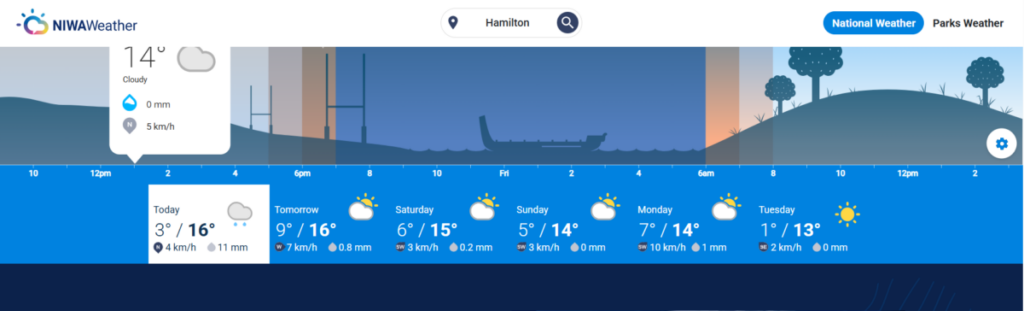
NIWA has forecast a mixed bag for Matariki weekend with a forecast showing cloudy skies in the Waikato.
If you’re looking to find the Matariki star cluster this weekend, NIWA meteorologist and forecaster Chris Brandolino suggests the lower North Island and Upper and Eastern South Island will be the top viewing spots. However, if you’re staying closer to home, the Coromandel might be your best bet with Saturday morning forecast as likely “the best chances for ideal viewing conditions”
The star cluster is visible for most of the year in Aoteoroa except for a period of about a month in mid-winter when it disappears from view due to its proximity to the sun, which blocks our view. When it reappears in the northeastern sky just before sunrise in late June or early July, it marks the beginning of the Māori New Year.
With the Matariki star cluster now visible on New Zealand’s eastern horizon just before the rising of the sun, NIWA has a cloud cover forecast for each region which covers the pre-dawn period 3am to 6am.
Brandolino said “Stargazers can check NIWA’s cloud cover forecast for the best viewing conditions in their region Matariki Viewing Conditions on Vimeo, which is updated at 3:30pm each day for the following morning.”
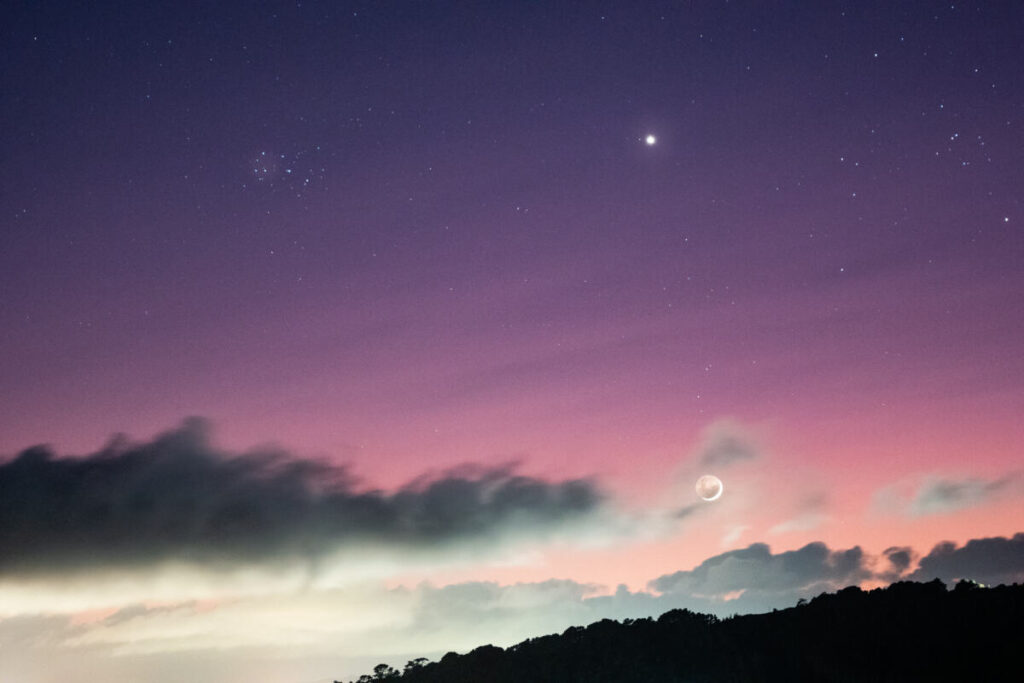
The Matariki cluster is visible to the naked eye and Te Papa has a guide for how you can see Matariki for yourself.
It says to look towards the eastern horizon before the sun rises, and follow these steps to find Matariki:
- Find three bright stars in a line. Māori call these stars Tautoru; they are also known as Orion’s belt.
- Next, trace to the left of Tautoru until you come to a group of stars that look like a pyramid. This is Te Kokotā.
- Finally, if you look to the left of Te Kokotā you will see Matariki
Matariki is known by many different names. In Greek, and widely used in English-speaking countries, it is called Pleiades. In Japan, it is called Subaru, which means ‘to come together’. In China it is Mao, the hairy head of the white tiger, and in India it is known as Krittika. The cluster is also known in Greek mythology as the seven sisters, and in Norse mythology the Vikings knew them as Freyja’s hens.