


Sergel: Hamilton Gardens offers “different perceptions of time and space”
Hamilton Book Month and Friends of the Gardens hosted an event highlighting Peter Sergel‘s book, , ‘The Time Traveller’s Guide to Hamilton Gardens’ last Thursday, August 21 at the Hamilton Gardens.
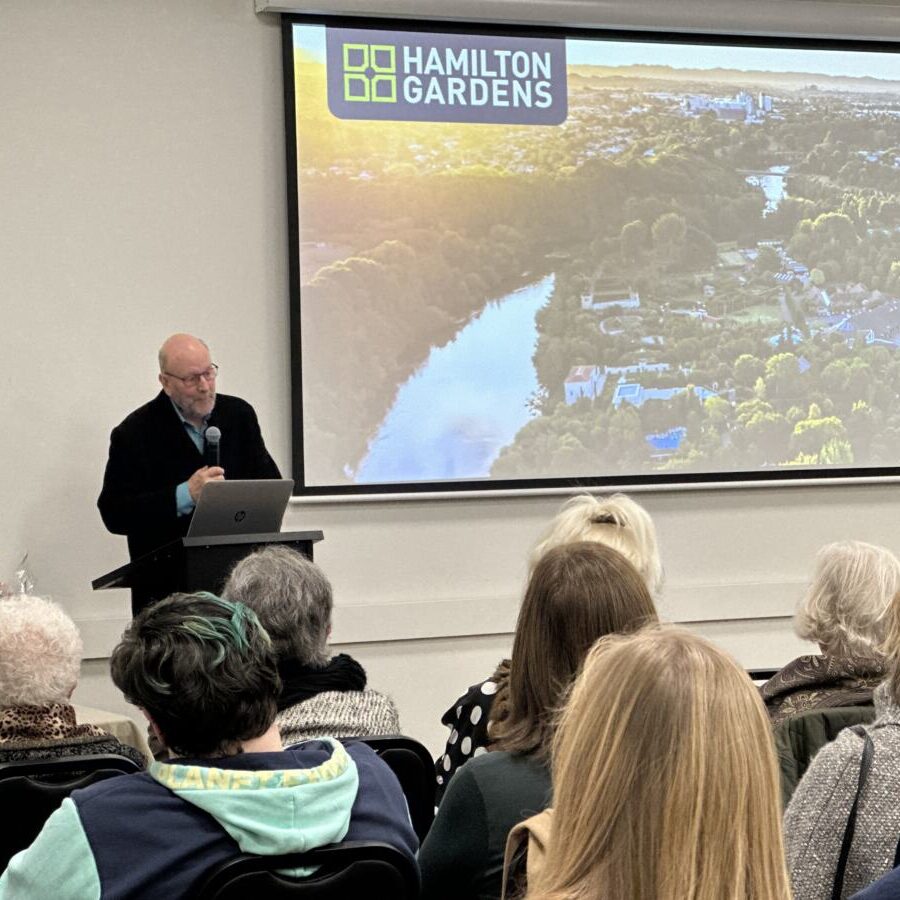
Sergel, the Hamilton Gardens visionary and former director, spoke to the audience of over 100. He talked about the project, which was started in 1978, and became his life’s work for more than 45 years, and acknowledged the voluntary efforts of the people who contributed to making the vision for this public space possible.
Sergel started his talk off sharing the differences between humankind and cultures, from Einstein to Snoop Dogg, then he described the Hamilton Gardens and the way they offer “Deep insights of cultures and different perceptions of time and space.”
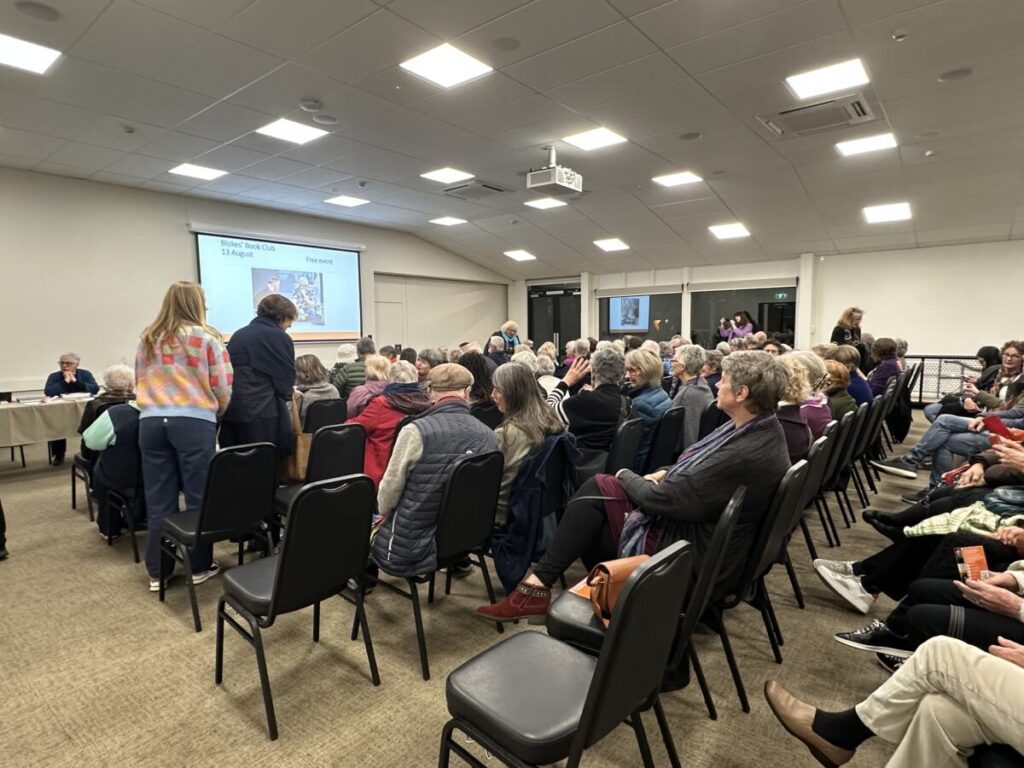
Photo: Ronella Felizardo
As he presented images of the plans developed for the different gardens over the past 4 decades, Sergel said he was inspired by history, culture, humankind and fiction, “It has become more than a productive garden, it involves other things like mythology and astronomy.”
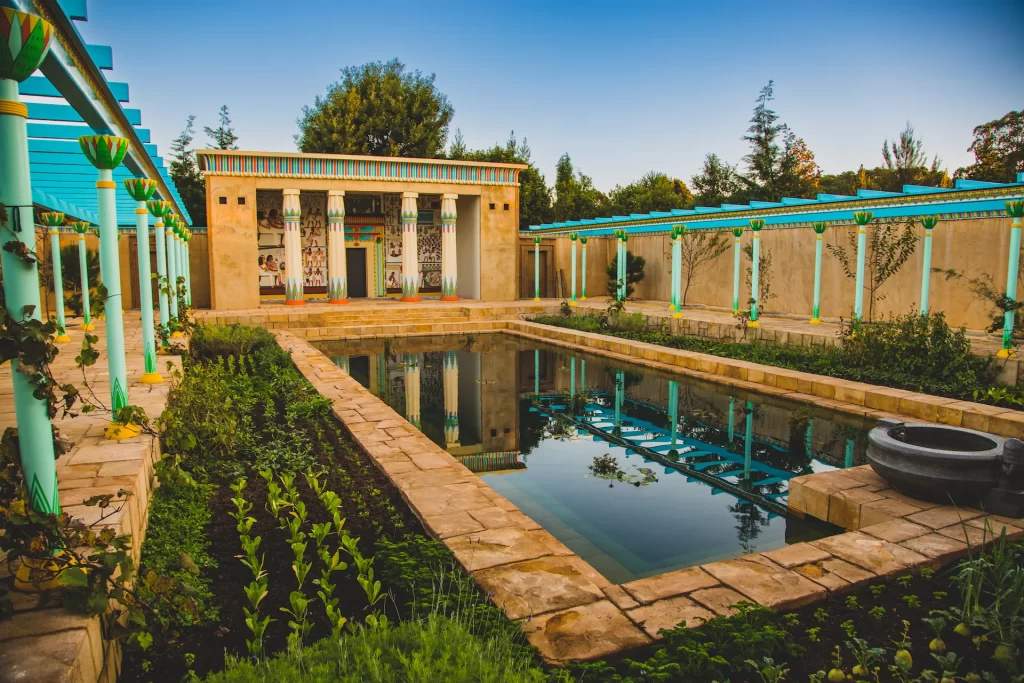
To illustrate his point, he shared an anecdote about The Egyptian Garden, explaining that its site is “At the north to show the rising of the sun representing rebirth.” He added that the hieroglyphics are important because it is an indicative part of the afterlife beliefs.
Sergel spoke about the history of the site, from farming, including for Māori, to the changes in the gardens like having cultivated spaces, mown lawns, and floral displays showing structure and colour. He also referenced changes in the future, saying that plants will adapt to a toxic environment and highlighting the impact of artificial intelligence.
Sergel spoke about climate change and the importance of green, cooling spaces in cities, including how things like moss walls can absorb carbon and the benefits of vertical and roof gardens to help the environment.
The Hamilton Garden’s focus is that nature is constantly changing, always adjusting to climate change and it is repurposing.
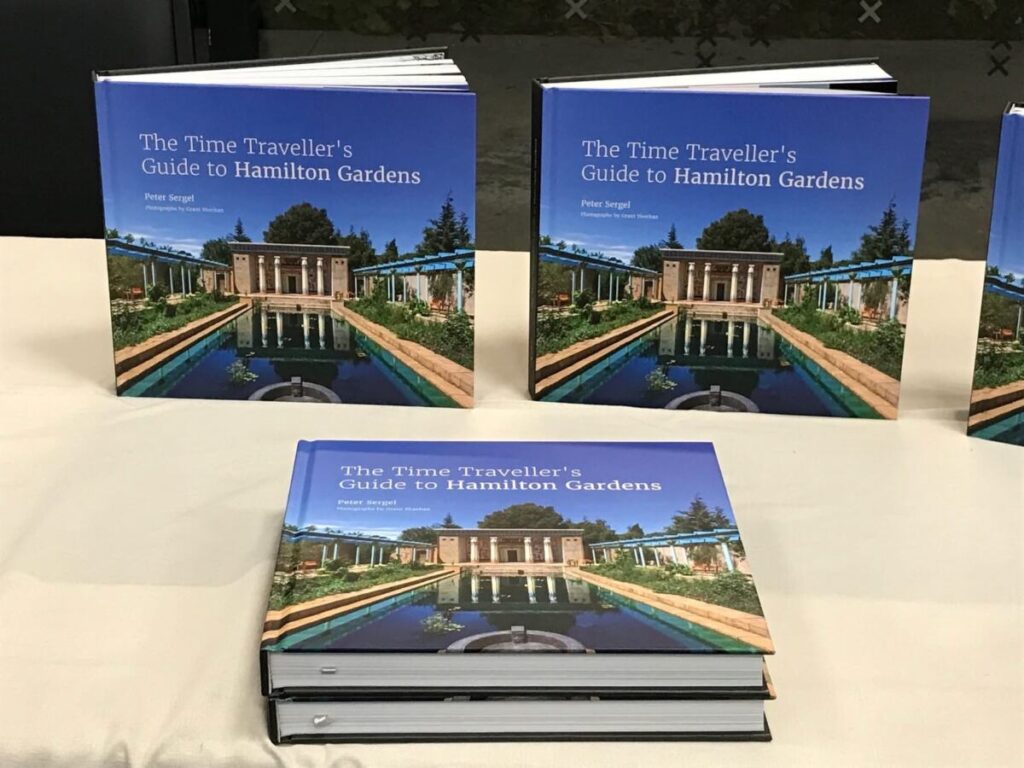
More information about The Time Traveller’s Guide to Hamilton Gardens is here
Ronella Felizardo is a year 3 Bachelor of Communication student at Wintec