

Te Whare Haka o te Puawaitanga: the heartbeat of Morrinsville College
Kapa haka isn’t just about performing; it’s about whānau, pride, and identity. Morrinsville College’s very
own kapa haka rōpū (group), Te Whare Haka o te Puawaitanga has become a safe space where students
from all backgrounds can come together to learn, grow and celebrate who they are through Te Ao Māori
(Māori performing arts).
The name Te Whare Haka o te Puawaitanga (TWHOTP) means “The house of blossoming”, and that’s
exactly what happens inside. TWHOTP is not just a classroom for learning. For many students it’s a home
away from home, a place where connection, culture, and confidence blossom together, a place open to
everyone no matter their background or experience.
Kapa haka tutor Raylene Beazley says the role is about more than teaching; it’s about guiding and
instilling leadership skills within them. “We’re just shaping the people they already are and building on
their characteristics.”
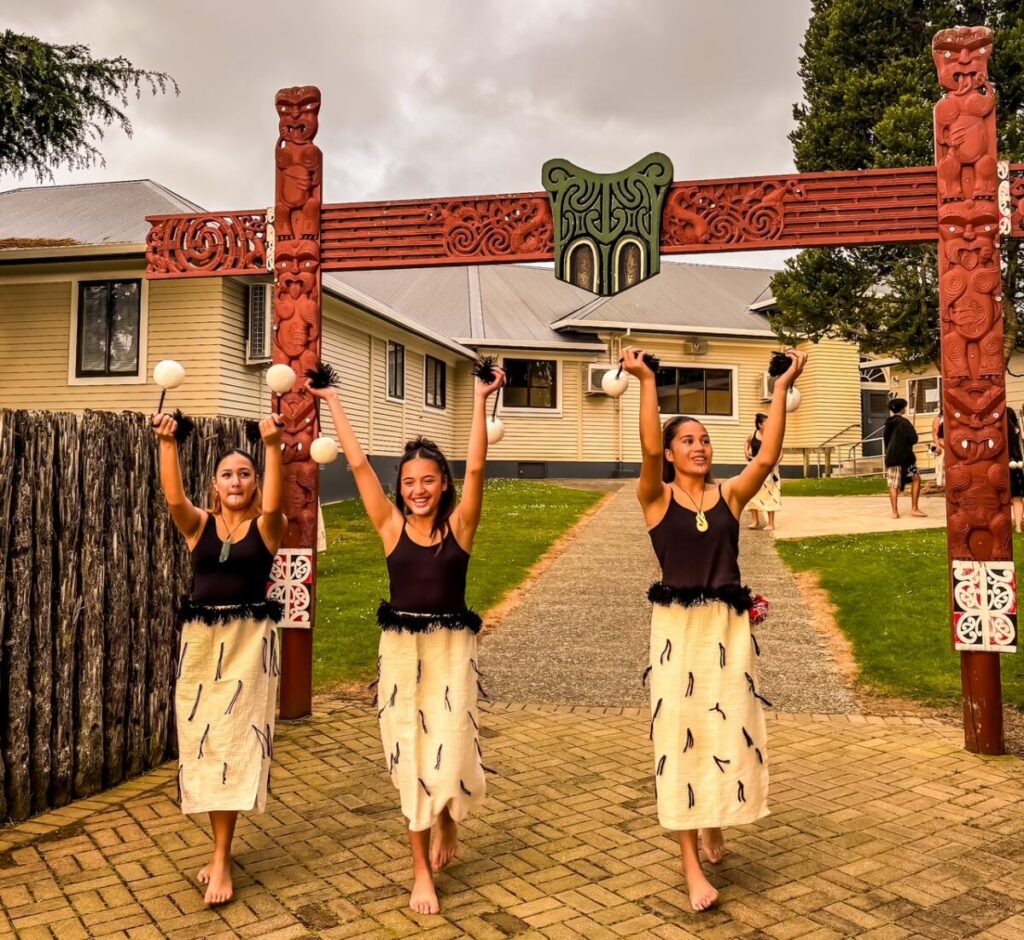
For group members Azia-Jaye Moana Edwards and Hemiona Green, kapa haka has been life-changing.
Azia describes the rōpū (group) as her second family.
“Kapa haka to me means having people to rely on, my backbone of who I am.”
Through kapa haka, she has gained confidence, leadership skills, and a
deeper connection to her iwi (tribe) and whakapapa (genealogy).
Behind each and every performance lie hours of hard mahi (work) and dedication. TWHOTP spend many
afternoons rehearsing, learning new items, and preparing for performances. And even when things get
tough, the laughter and aroha shared between them is what keeps the wairua (spirit) strong.
Every waiata (song) has meaning behind it and is used to tell a story, whether it’s about whakapapa
(genealogy), whenua (land), or whānau (family). Many of their items are built around keeping Te Reo
Māori alive and bringing tikanga (customs) and kawa (protocol) back onto the marae (meeting house).
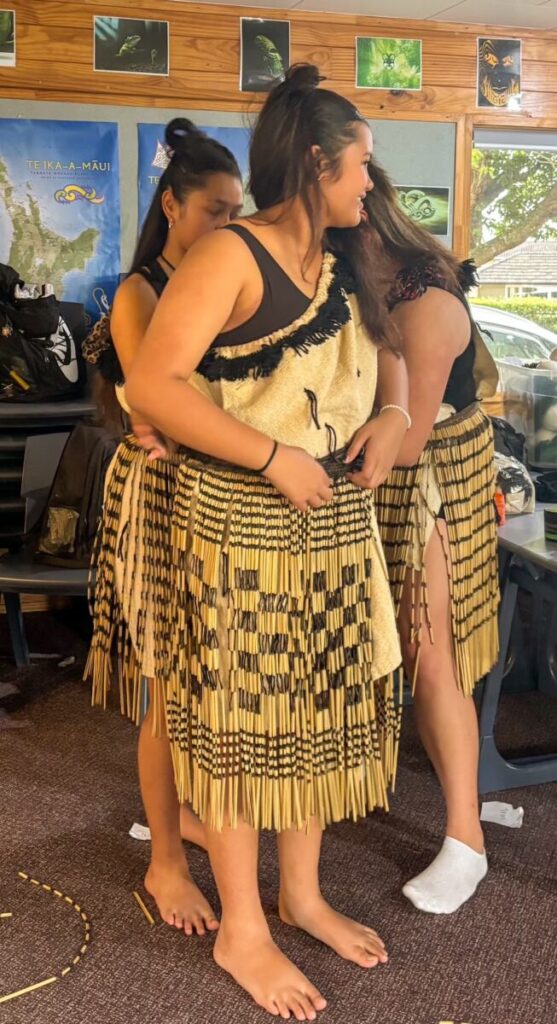
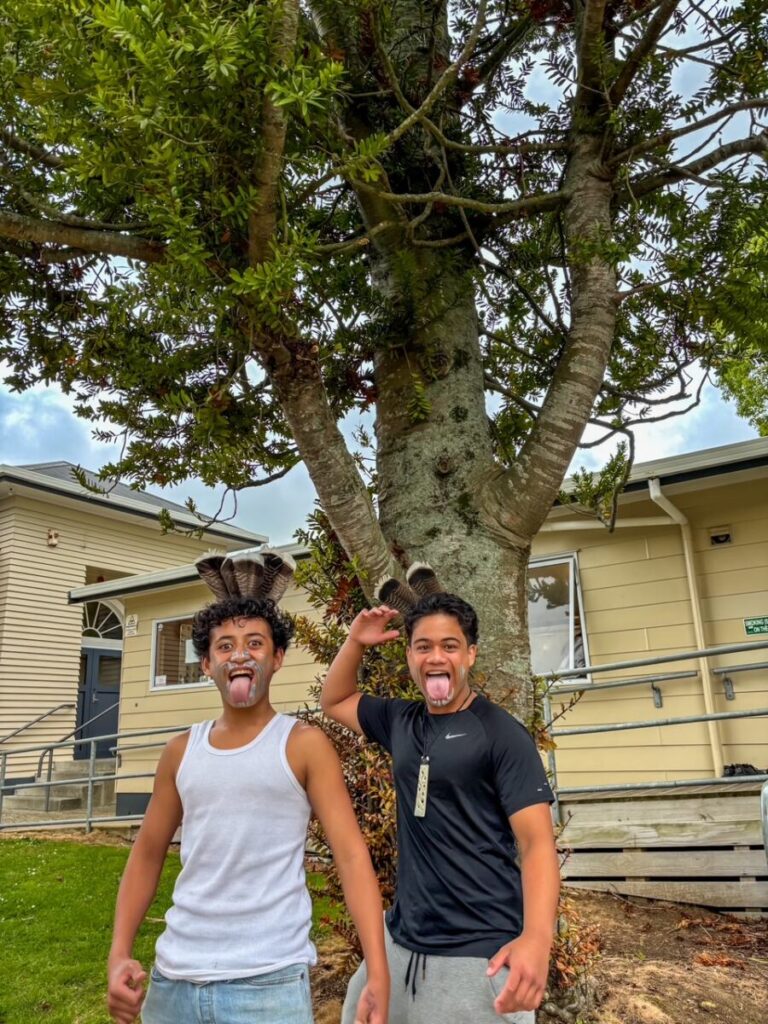
While kapa haka isn’t something that is universally dominant it holds a special place in Māori culture and
in Aotearoa and is a way for people to express their identity and history through performance and
storytelling.
Hemiona also speaks proudly of the group’s strong wairua (spirit). “We’re not just a group who come
together for practices; we’re actually a whānau,” he says. Kapa haka has helped him appreciate the
sound of others and gain deep manaaki (respect) for others. “I’ve come out of my skin. I’m more confident
and brave now… Kapa haka helped me find my voice.”
Raylene says watching the growth is what makes her proud. “You see them come in as shy year 9s, and
by the time they’re seniors, they’re composing their own items and leading others. That’s the magic.”
For these students, kapa haka is more than standing on stage, it’s standing together as one, being proud
of who they are and representing their whānau. It connects them to their ancestors, their community, and
their future. Together, Te Whare Haka o Te Puawaitanga continues to embody the heart, spirit, and pride
of Morrinsville College.