

Beyond the Paradise Postcard – a French photographer in Aoteoroa
Florent Braquart came to New Zealand to chase mountains. Inspired by the sweeping peaks of The Lord of the Rings and the romantic pull of vast, “untouched” landscapes, he planned to stay six months, capture the sublime, and head home. Instead, the French photographer stayed, and began questioning the very myth that brought him here.
At 9.30 on a Thursday morning, Florent Braquart is sitting in a windowless classroom at Wintec’s School of Media Arts. He’s agreed to be a ‘guinea pig’ for the feature writing class to practice interviewing, and both he and the students are nervous.
It’s an unassuming setting for someone whose work grapples with big ideas: beauty, myth, colonisation and the way we frame the land beneath our feet.
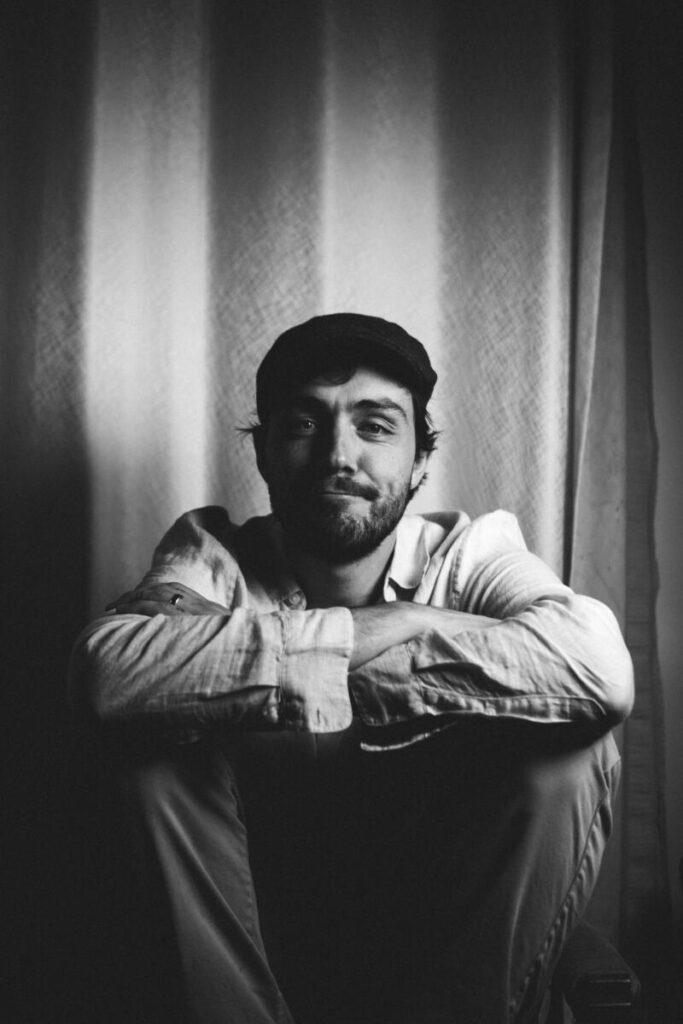
Braquart, 34, grew up in Lens, an old mining town in the north of France near Calais. “Red bricks everywhere,” he says. “Quite industrial, quite flat, grey and cold and quite boring.” Like many in the town he had family connection to the mines, and said when the pits closed, the region struggled.
“It’s one of the poorest regions in France because it’s quite hard for people to find a job there.”
If the outside world felt flat, his inner one did not. At six, his father was driving him to music lessons. He studied theory and drums for years, drew “monsters and dragons and stuff like that”, and soaked up Jimi Hendrix in the car.
“Because it was so boring outside, I developed my inner world, I guess.”
Photography came later, at 25, during a humanities degree in art history, literature and history. Surrounded by discussions of composition and visual storytelling, he began filming trees and waves to accompany his music. “I was trying to do musical landscapes,” he says. “Then my interest towards the camera became more directed towards photography.” Self-taught, he sourced tutorials online and followed instinct rather than a formal pathway.
Before that, he had worked seasons in the French Alps, drawn to mountains and the aesthetics of the sublime, the idea that landscapes can dwarf us, even intimidate us. The 18th-century painter Caspar David Friedrich became a key influence. “Using the immensity of the mountains to make you feel tiny and insignificant in the world.”
Then came The Lord of the Rings, and Aotearoa.
“I watched The Lord of the Rings and thought, it looks like this country has really beautiful mountains, so let’s go there.” He arrived in 2019, planning to stay six months and mount a landscape exhibition back in France. Covid changed that. Bookings for festivals and weddings were cancelled and visas extended.
He went back to France but “it didn’t feel right”, so he returned to New Zealand.
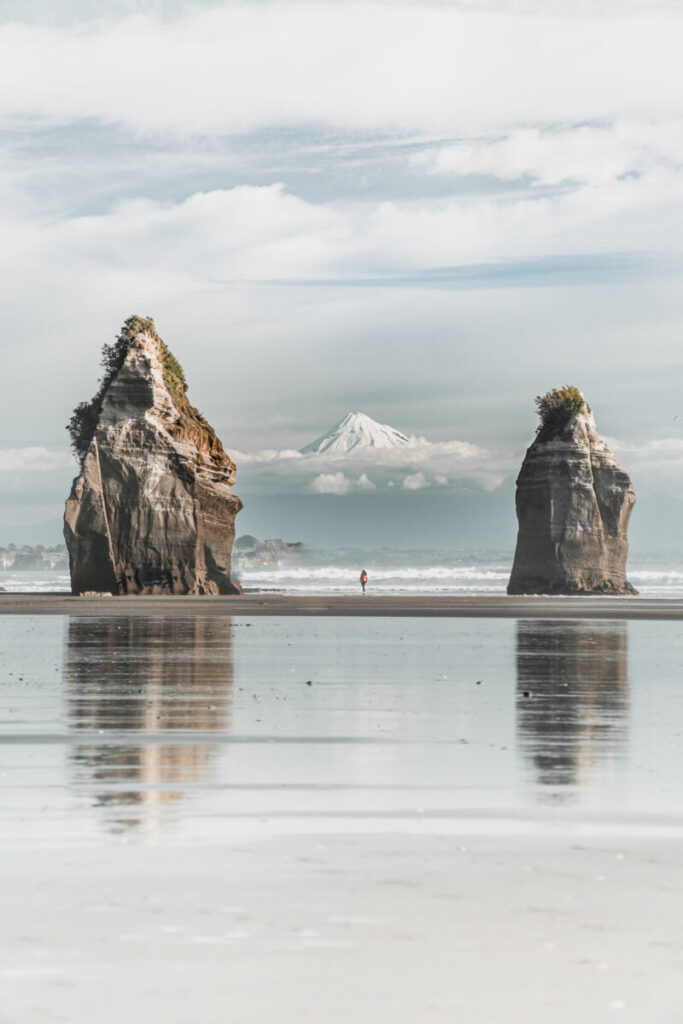
A Master of Arts followed, initially, he admits, for practical reasons. He thought, “I need a visa. What am I good at? Photography.” But the study reshaped his thinking. He began questioning the Romantic tradition he loved, and the myth of New Zealand as an “untouched paradise”.
“I was being sold the same myth as the first settlers,” he says. “And I was trying to do the same thing again.”
As a student in the School of Media Arts at Wintec, Braquart relishes being around other creatives. “It felt good to not be just lonely by myself, doing my stuff, but with other people like me.”
Now working as a visual media technician in the school, he maintains the connections by supporting students to create their own work.
Music remains a central interest and he prefers live performance “especially in this age of AI-generated everything”. He gravitates toward funk and “grooves that make you move”. He plays video game World of Warcraft to unwin, “The landscapes are beautiful and the music is kind of drawing you into the world. It’s got a really good vibe.”
He has worked road crews, hospitality, ski fields and as a barista and after initially finding NZ coffee weird, he now swears by a flat white. But photography is the through-line.
There was a moment, he admits, when AI made him wonder, “What’s the point?” He’s moved past it. “I can tell when it’s AI-generated now,” he says. “I just don’t think about it as much anymore.”
Instead, he keeps asking harder questions, about land, myth and belonging, and reframing the picture