

Tria Takes Over!
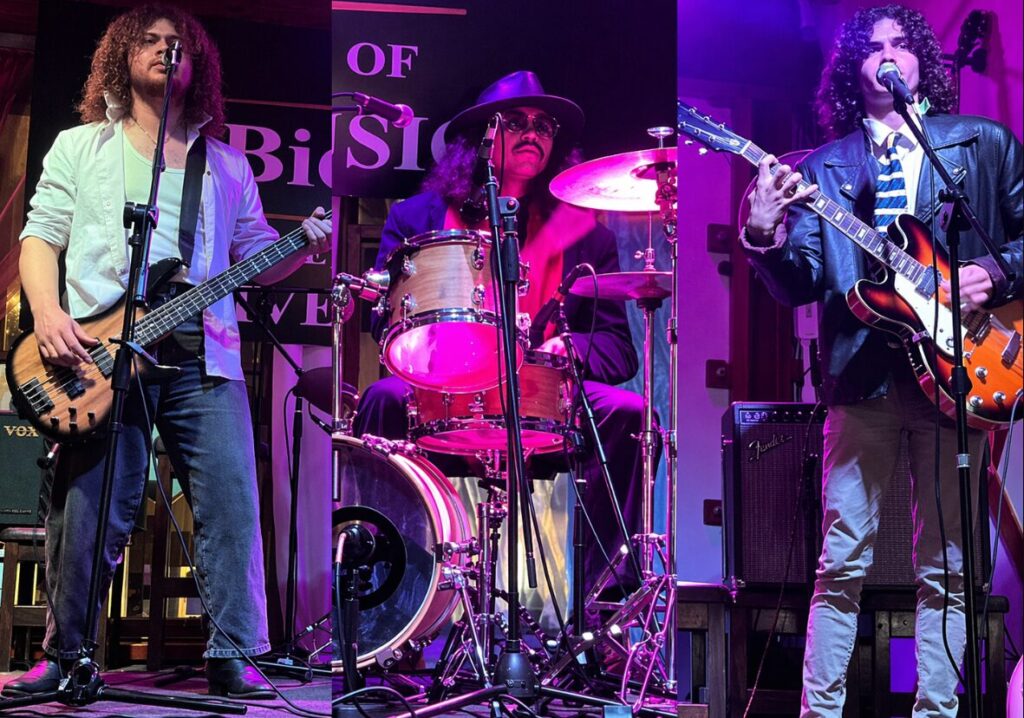
“Apologies for the interference. Your broadcasts are currently being taken over by the collective known as Tria…”
When Tria walks into a room, people notice.
Forget every out-dated rock band stereotype. With their vintage-inspired threads, bold experimental style and wild mane of curls, Tria commands attention from the moment they hit the scene.
Their sound? It’s “Groove Rock” reimagined: raw, shadowy and magnetic.
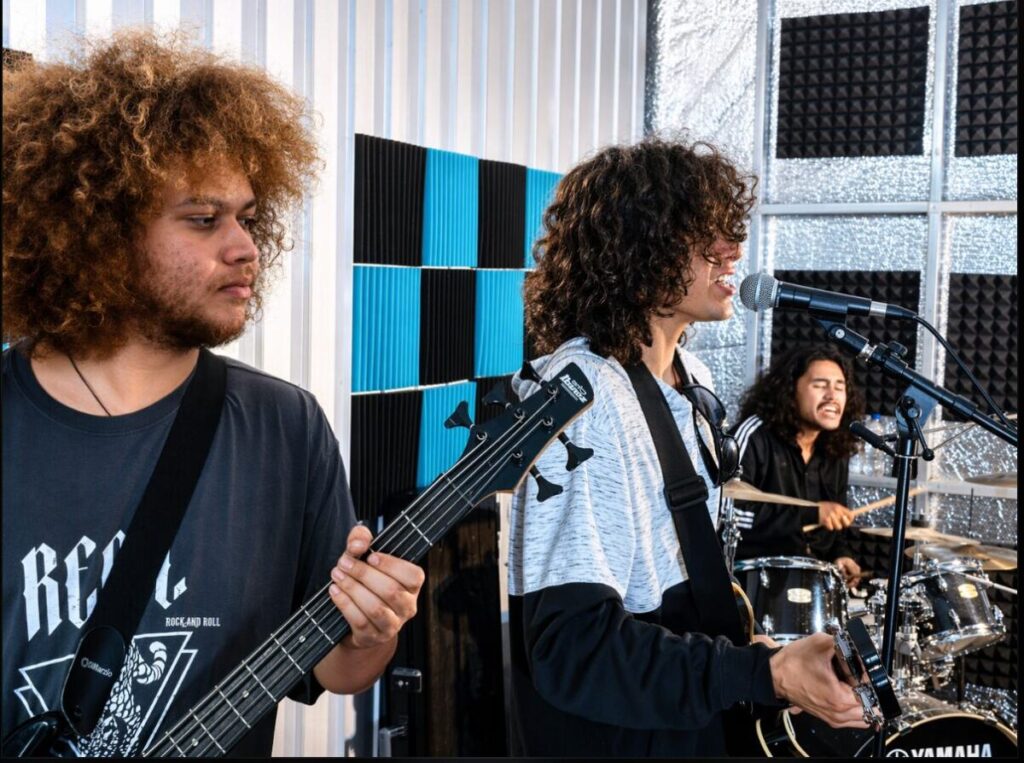
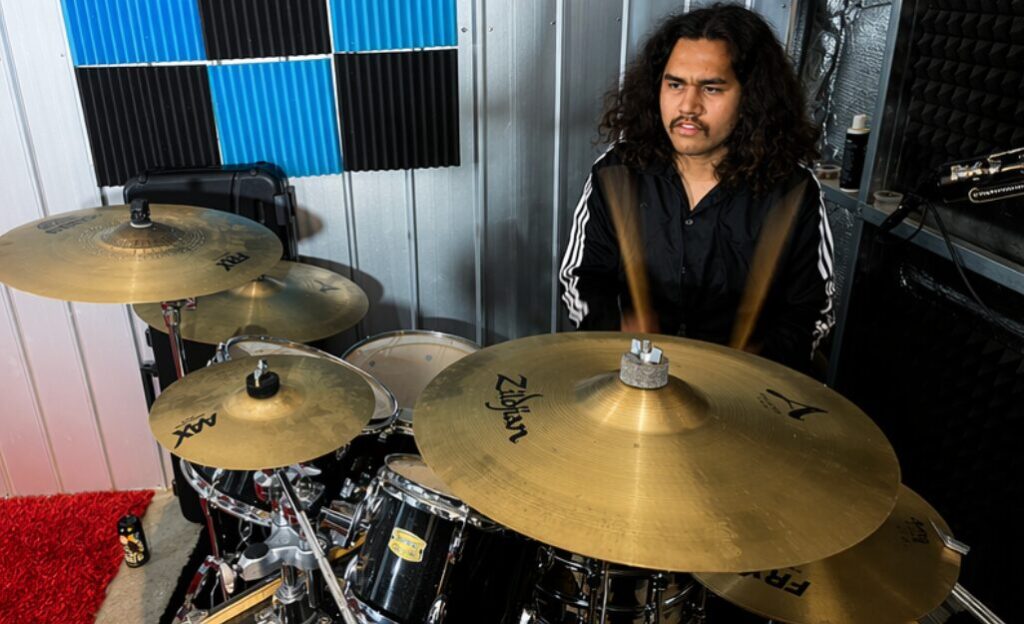
Fronted by powerhouse bassist Netea De Souza-Taua, electrifying guitarist Sam Baker and dynamic drummer Dynasty Beazley, Tria isn’t just making music.
As vocalists and songwriters, these three are bringing their voices and visions to their band. Redefining the rules of Hamilton’s rock scene for young aspiring artists.
“Everybody was like, whoa!” Baker says.
For Tria, standing out has never really been the issue. Instead, the band has found something even more important in Hamilton’s rock scene: spaces where they can be completely themselves.
As musicians, Beazley, who has Māori heritage, and De-Souza Taua, who has both Māori and Asian heritage, say that seeing people from different backgrounds in local venues has made Hamilton’s music scene feel more inclusive and inspiring. In turn, it has given the band the confidence to embrace more of their own Island and reggae influences within their sound.
For De-Souza Taua, who is also gender diverse, these spaces have made it easier for them to be a more confident musician.
“There’s some really inclusive spaces here in Hamilton, and I’m beyond grateful for that,” they say.
They point to Nivara Lounge and Biddy Mulligan’s as the places where they have felt most inspired.
For De Souza-Taua, Nivara Lounge is more than just another venue. Hidden away, with its dive-bar atmosphere and well-worn interior, it has become a place where people from different walks of life feel welcomed.
“Nivara Lounge is like an older queer central space,” he says. “It’s a safe space for a lot of older queer people in Hamilton.”
For De Souza-Taua, that is what makes the venue special. Younger LGBTQ+ musicians performing alongside older queer people who have been part of Hamilton’s community for years.
“It’s a place I’ve wanted to perform at for a long time,” he says. “The Last Place Bar and Nivara Lounge are two of the last dive bars in Hamilton.”
These spaces have also given the band more confidence in how they present themselves. “With the vintage style that I’m going for, I don’t feel the need to dress like everybody else,” De Souza-Taua explains.
Beazley agrees that the local scene is becoming more welcoming.
“Everyone’s different at the end of the day,” he says.
For Beazley, that is what makes the local scene exciting. He says rock audiences are made up of all kinds of people and that uniqueness keeps spaces youthful and playful.
“You discover a lot more sounds,” he says. “You’ve got all these different looks, all these different lives and all these different people. They all come from different backgrounds, but they share the same kinda love, a love for music.”
Beazley believes the future of rock should be less about fitting in and more about letting people enjoy the music.
“Rock shouldn’t all look the same,” he says. “That’s what makes it interesting.”
The band believes the Hamilton rock scene is changing as people with different backgrounds, cultures and identities are becoming involved. Instead of making the scene feel divided, they say it has made it more exciting.
Baker agrees, describing the local scene as “a never-ending cycle of inspiration.”
That same energy carries through into Tria’s music.
The band describes its sound as dark, emotional and slightly chaotic. Their songs explore heartbreak, propaganda, ignorance and the feeling of being overwhelmed, with tracks such as Patchwork Perfection, The Son and The Nuke drawing directly from personal experiences and personal struggles. The group uses music almost like a journal, turning emotions into heartfelt vocals, heavy chords and lyrics that resonate with all audiences.
“The Son is about a young person who joins the army because of propaganda. It shows how people are taught to see enemies everywhere, but in reality, they are fighting things that aren’t really there,” Beazley says.
De Souza-Taua is currently working on an upcoming project called ‘I’m Just a Girl’. This song expresses gender struggles and their own experiences navigating it, whilst also serving as an emotional anthem for those navigating their own gender identity struggles.
Baker believes part of staying true to the band means not trying to sound like everybody else.
“The hardest thing has been keeping a consistent sound,” he says. “I want to experiment with lots of different sounds, but I still want it to sound like Tria.”
Even with these heavier themes, the band does not take itself too seriously.
Baker grins and admits the band seems incapable of writing a genuinely happy song, “we can’t write one happy song, can we?”, the others chime in with a harmonised ‘yeps’ followed with more contagious laughing.

De Souza-Taua fidgets with their bass guitar and curls while they talk excitedly about Nivara Lounge and Biddy Mulligans.
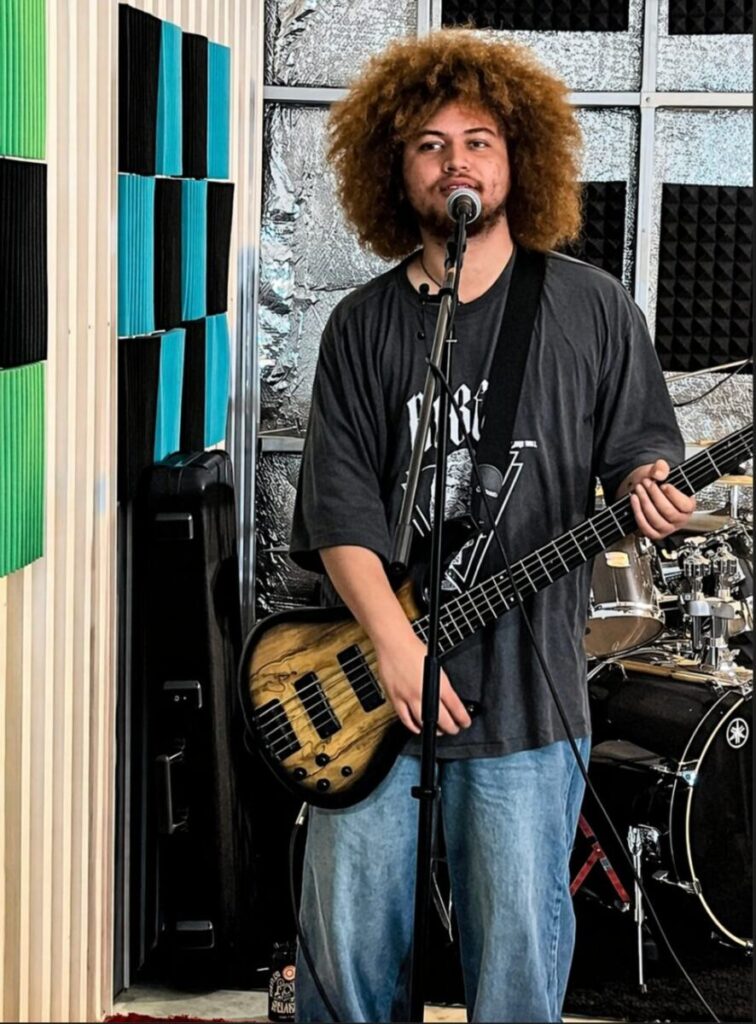
And Beazley sits back quietly until the conversation turns to the future of rock.
Then, without hesitation, he says that the future of rock should be about giving people the freedom to be whoever they want to be.
It is a simple statement, but watching the three together, it already feels like they are doing exactly that.
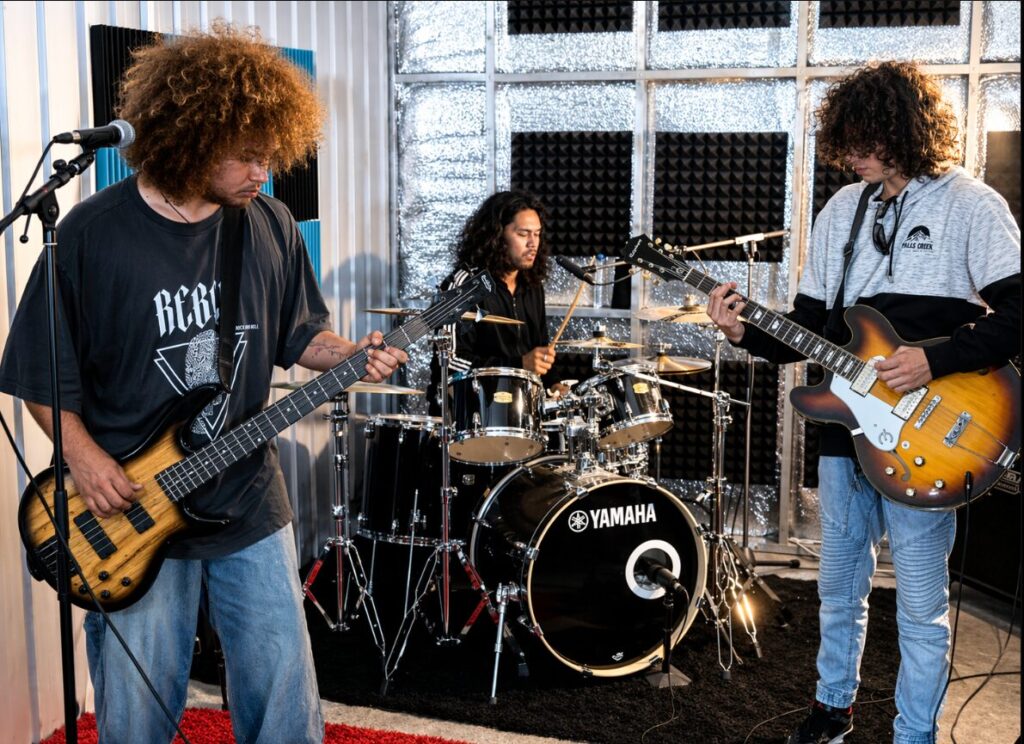
That feeling extends beyond the music. The members say one of the best things about being in the band is being surrounded by people who understand and support each other.
When asked who has made him feel most accepted as a musician, Baker does not hesitate.
“I’d say these two,” he says.
Now, Tria is preparing for its biggest year yet.
The band is recording 2 songs with Kiwi renowned musician Pangellucus, who plans to release an album next year with Tria as the backing band.
They also are set to perform an hour-long set at Nivara Lounge, on the 30th of May 2026 at 8 PM.
And future hopes to venture into new venues such as the Last Place Bar and venues beyond.
For a band still making its way through Hamilton’s open mic circuit, Tria already feels like an important part of where local rock is heading: more diverse, more open and entirely unafraid to be different; and sound different.
“Apologies for the interference,” the band says. “Your broadcasts are currently being taken over by the collective known as Tria. Hijacking your radio stations, live shows, playlists and now articles.”
It is an unapologetic sentiment that captures the band perfectly: rebellious, playful and completely uninterested in fitting into the usual mould. Rather than waiting for permission, Tria seems determined to create its own place in Hamilton’s music scene.
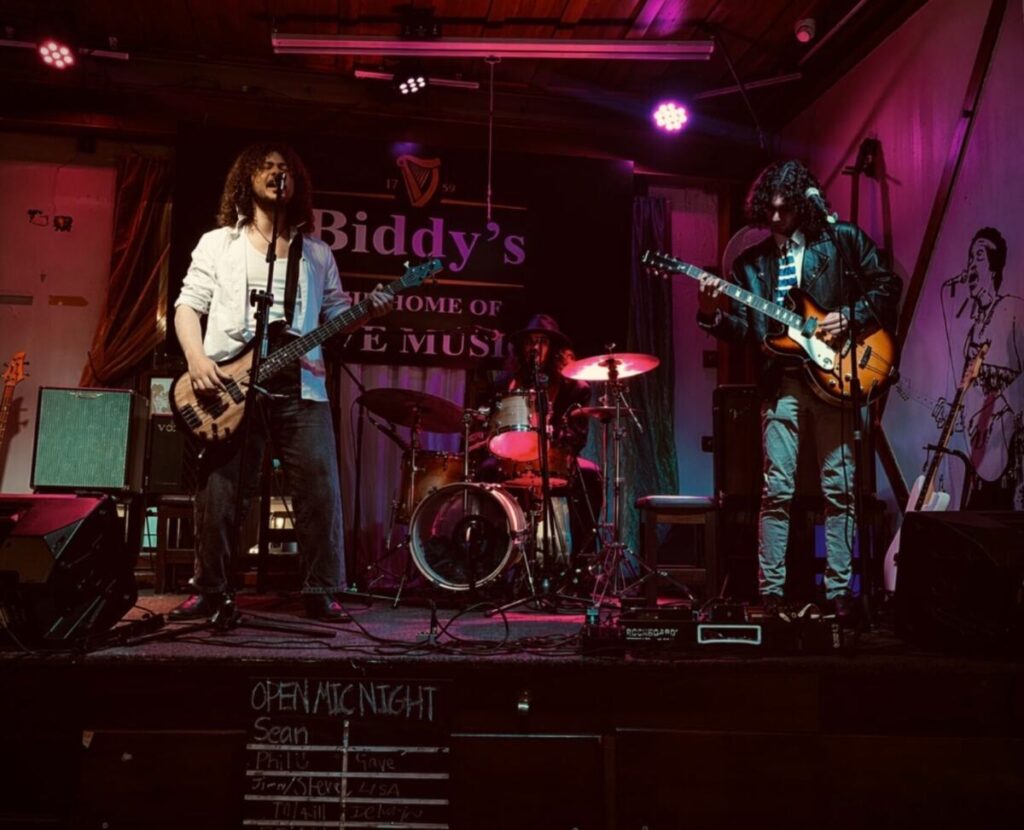
Follow Tria on Instagram, Facebook and Tik Tok @tria_the_band