


Aotearoa/New Zealand Government Election 26
The party hoardings are up, and the general election is only five weeks away.
Kirikiriroa-Hamilton has one of the youngest populations in Aoteoroa-New Zealand, with an average age of 32. It also has a high rate of youth unemployment for 15-24 year olds.
To find out more about what candidates have to say about issue relating to youth, The Waikato Independent surveyed Hamilton East candidates for their views on a selection of key subjects.
These are job creation, housing affordability, inflation and how to keep young New Zealanders in the country. Responses were sought from the four candidates competing for the Hamilton East electorate seat for Labour, National, New Zealand First and Opportunity.
People are at the centre of all of their responses, the difference is in the execution. Some prefer more Government intervention into on going problems, some less. The left would tax more, the right would not.
We started with some Kotahitanga/Introductions, with each candidate sharing their background, their connection to Hamilton and what inspired them to run for office. Responses to this, and three questions from each candidate are below in alphabetical order.
Georgie Dansey/Labour
My whakapapa is that my father is Ngati Tuwharetoa from Taupo, my mother is British, I moved to Hamilton to study teaching at the University of Waikato and when I graduated, I became a teacher at Te Awamutu College.
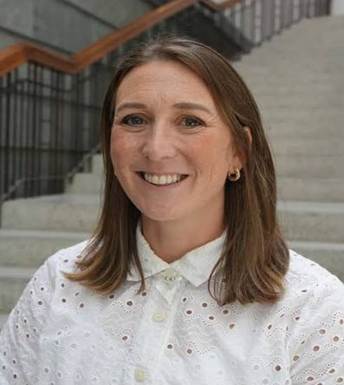
Hamilton East has now been my home for over 20 years, and I have been a member of the Labour party since 2011. I became involved in the New Zealand Post Primary Teachers Association while being a teacher at Te Awamutu College, it was through this union that I became interested in the Labour party.
Sehai Orgad who campaigned for the Hamilton East electorate in 2011, inspired me to take politics further.
Ryan Hamilton/National

Ko Ryan Hamilton tōku ingoa, ko te Mema Pāremata mō Kirikiriroa ki te Rāwhiti ahau. I whānau au ki Kānata, Heoi anō, he uri ōku mātua nō Aotearoa. I whānau taku hoa rangatira ki Te Awamutu, ā, e hono ana ia ki Ngāti Paoa me Ngāti Maniapoto.
English translation – My name is Ryan Hamilton, and I am the Member of Parliament for Hamilton East. I was born in Canada; however, my parents are from New Zealand. My spouse was born in Te Awamutu and has ties to Ngāti Paoa and Ngāti Maniapoto.
I went to Frankton Primary School, then Southwell for intermediate, Hamilton Boys’ High School for Year 9, and Fraser High School for the rest of my secondary education. All our children have gone to school in Hamilton too. My wife Marie and I have been business owners for more than 20 years.
It is important for me to serve my community, I have also served as a trustee and chair of the Hamilton Christian Night Shelter Trust / Te Whare Korowai.
Nicola Laboyrie/NZ First

Originally from Wellington, I went to St Mary’s College where my dad was a lawyer and his chambers were near the Parliament buildings. I studied at the University of Wellington and my grandfather was the longest serving ministerial secretary for Walter Nash, Muldoon and Rowling, growing up in Wellington I had politics all around me.
Eventually we moved to Raglan where I met and married Aaron Laboyrie, a pragmatic fisherman. We now live there with son Finn who is doing a plumbing apprenticeship and daughter Estelle who likes travelling and is looking at doing a startup.
I became so frustrated with local politics and the problems people have if they want to develop their land that I entered local politics initially as a Raglan Community Board member. I have now taken my political career a step further, becoming a candidate for NZ First in Hamilton East.
Naomi Pocock/Opportunity Party

Tenaa koe, ko Aotearoa te wa kainga, Ko Taranaki te wa kainga oki tupuna, ko Waipa te Turangawaewae, tupuna te Māori o Aotearoa maunga, ko Pakeha te iwi, ko Naomi ahau.
I am from Taranaki but grew up in the Waipa district under the shadow of Mt Pirongia, this is where I feel grounded.
I worked overseas in Basel Switzerland for Hewlett Packard, as a project rollout manager before moving to Ireland where I set up an indoor sports business, offering netball and futsal (indoor football – 7 a side). I have since chosen to resettle in Aotearoa and live on a small lifestyle block just outside Hamilton city, with my three sons.
Twenty years ago, when I returned from overseas, I looked at New Zealand’s political system and thought this needs fixing, not enough long-term vision. The Opportunity party offers fluidity between left and right ideologies; and policy is based around evidence. I liked the idea of coming to an agreement through dialogue and consensus.
Three questions on policy:
Question 1:
Hamilton has a high youth unemployment rate for 15-24 years, as of March 2026, www.infometrics.co.nz data shows youths not in education or training stands at 14.8%, compared to an overall rate in NZ of 13.8%.
Do you have any policy around job creation?
A: Georgie Dansey
Yes, many young people do not see opportunities here; we’ll extend the apprenticeship boost to two years (this is a payment that the Govt gives directly to employers so they can take on apprentices – currently $500 a month for one year).
We will also open the boost to a wider range of trades and industry which will have a twofold effect, it will get more people into training, and it will provide more skilled people to work in key areas of infrastructure, which NZ desperately needs.
A: Ryan Hamilton
Yes. The best long-term jobs policy is a growing, productive economy, backed by clear pathways into work. National’s 2026 plan forecasts 220,000 additional jobs over four years and supports investment in infrastructure, energy and trade.
For young people, Budget 2026 doubles Trades Training Academy places, expands Youth Guarantee places and provides community job coaching, including a $1000 payment for eligible 18-to-24-year-olds who find work and remain off benefit for 12 months.
A: Nicola Laboyrie
Yes, opening mining infrastructure, closing off excess immigration, a lot of jobs that used to be gateway jobs for young people are being taken by deregulated immigration.
I’d like to see a sovereign wealth fund started up so people could have an alternative to banks, for sourcing funds to create more business enterprises. This would help shift land speculation, increase productivity and give young people more opportunities to go into business.
A: Naomi Pocock
Yes, Opportunity has a Breakthrough Economy policy that is based around innovation that will incentivise young kiwis to stay in Aotearoa, by funding science properly, investing more in innovation.
Also, an Impact Business idea, where people can invest in a business and deduct their investment like a charity. It would be investing in a business that is making an impact either in a social or environmental way, creating inspiring jobs where people would want to work.
Question 2:
There is increasing homelessness and housing unaffordability in Aotearoa, with infometrics data showing in Hamilton prices are 5.7 times the household median wage, 33.8% of their income.
Do you have a solution to this problem?
A: Georgie Dansey
The Labour Party plans to put a 28% Capital Gains Tax in place which will encourage speculators to invest more in productive industries, such as small business enterprises instead of their property portfolios, freeing up property for first home buyers by bringing property prices down.
A: Ryan Hamilton
My focus is to remove barriers to building, enable more homes near jobs and services, and pair new supply with effective support for people experiencing homelessness.
Our recent announcement of 50 more social homes in Hamilton is also designed to deliver more one- and two-bedroom homes, helping to meet a need that has been overlooked for some time.
We have also enabled employer contributions for KiwiSaver under 18 and are lifting the rates up to 6% for both employee and employer over the next few years. This will ensure more young kiwis will be able to use their KiwiSaver to buy their first homes.
A: Nicola Laboyrie
We oppose opening the housing market to foreign speculation, we also advocate for low-cost government funding to local councils for public rentals and elderly housing projects and we propose an independent ‘Housing Commission’ to take a long-term non-political approach to long term housing issues.
A: Naomi Pocock
We are the only party that wants to reduce house prices by 10-15% through our tax reset policy, we would also like to increase housing stock by making it easier for property developers to be able to build cheaper more affordable homes.
The tax reset would take the burden off wage earners and small businesses and shift it to non-productive land bankers; this would open more land to build homes.
Question 3:
Inflation is high at 4.1% as of June 2026 with many young New Zealanders leaving due to the cost of living, 39% of New Zealanders heading overseas are aged 18-30 years.
Do you have policy around controlling inflation, and giving young New Zealanders the incentive to stay or return to Aotearoa/NZ?
A: Georgie Dansey
By creating jobs, building productivity, a small business policy which lifts the GST threshold makes it easier for someone to start up and run a small business.
Also, an asset write off for equipment businesses buy under NZ$1000. Free GP visits paid from CGT (capital gains tax), free prescriptions and a $20 cap on bus fares will give cost of living relief to many households.
A: Ryan Hamilton
Budget 2026 is focused on economic growth, keeping taxes low, infrastructure and trade, with wages forecast to grow faster than inflation. It also expands trades training and Youth Guarantee opportunities.
These measures must be matched by faster housing delivery, stronger links between study and employment, and a business environment that rewards innovation and career progression. My priority is to make Hamilton a place where graduates and skilled workers can build a career, start a business and afford a home.
A: Nicola Laboyrie
I think capitalism can fail when we get crony capitalism and corporations taking power away from the people on one side, or authoritarian government on the other doesn’t help, so regulation on both sides.
The breaking up of monopolies, less government interference through deregulation and adjusting tax brackets for inflation every three years would have a positive effect.
A: Naomi Pocock
We have an Abundant Energy policy which would reduce energy costs by increasing funding for renewable electricity generation, incentivising more electricity projects through low interest loans for solar panels and investing in electrifying public transport.
The Tax Reset policy would bring house prices down, investment in R&D would help create better paid jobs and getting rid of interest on student loans would give New Zealanders the incentive to return home.
Nominations for the upcoming election close noon, October 8.