


Farmers see AI as a tool, not a replacement
By Cheryl Voss
Artificial intelligence is becoming an increasingly common part of agriculture, but many New Zealand farmers and industry leaders believe technology is unlikely to replace human experience any time soon.
AI is seen as a valuable tool for improving efficiency and reducing administrative workloads, however, people also caution that important decisions still rely on local knowledge and practical expertise.
Shaun Vickers, General Manager of Investments and Partnerships for Horticulture NZ, said AI had already become a useful part of his work developing and purchasing orchards.
“It gives time across the day,” Vickers said.
Tasks that once took hours can now be completed in minutes, allowing him to spend more time focusing on strategic decisions and business planning.
While he sees significant benefits in using AI, Vickers does not believe technology should make final decisions.
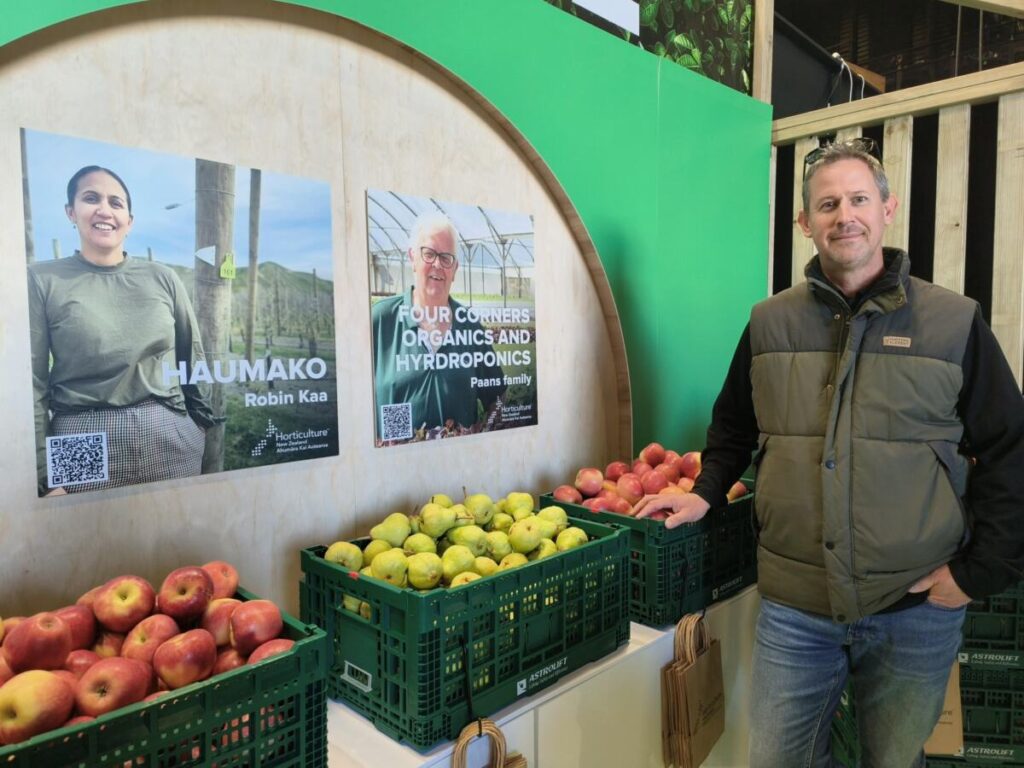
sees it as a tool to support, not replace, human decision-making. Photo: Cheryl Voss
That view is shared by horticultural scientist Tom Stephens, whose work focuses on water quality and environmental management.
“Science-based AI is the latest advance and has potential,” Stephens said.
“But it’s based on the fundamentals we provide. It’s a tool that has to be used carefully, but it doesn’t replace.”
Stephens said AI could analyse information and identify patterns, but people still determined the goals and values that guide decision-making.
“AI can’t replace what we want to achieve and our feelings. It’s not the navigator,” he said.
Dairy farmer Tama Watson remains more cautious about the technology. For Watson, farming has always relied on practical experience developed over years of working the land.
“AI, you’ve always got to rely on tech and paperwork,” he said. “I’m a pen-and-paper type of person, and when you write it down, it sticks. Go hard or go home.”
Watson questioned whether algorithms could ever fully replicate the intuition developed through years of reading weather patterns, livestock behaviour and changing conditions on a farm.
Despite those reservations, AI adoption continues to grow across New Zealand and internationally.
Research from the University of Melbourne and KPMG’s 2025 Trust, Attitudes and Use of Artificial Intelligence: A Global Study found that 82 per cent of New Zealand organisations now use AI in some form. However, uptake in the primary sector remains comparatively low.
The report found many rural businesses remain uncertain about the value of digital technologies, with a significant proportion having no plans to adopt AI tools.
Meanwhile, countries such as the United States and China are investing heavily in agricultural AI. International reports suggest technologies including crop monitoring, soil sensing and predictive analysis are becoming increasingly common in major agricultural markets.
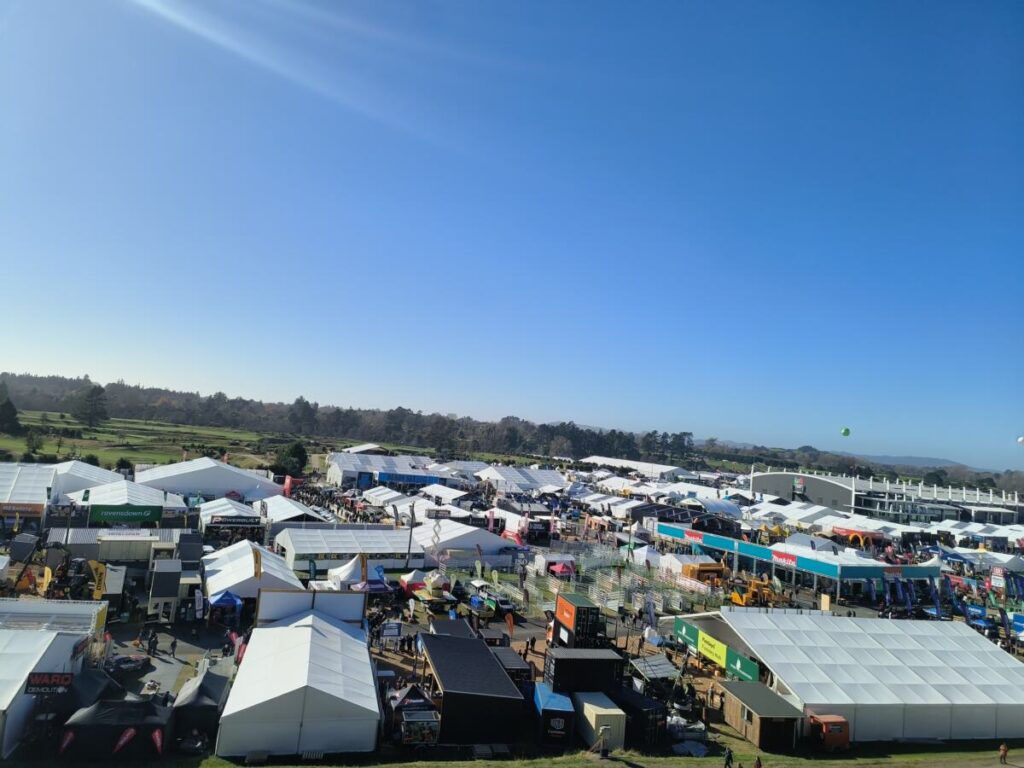
For many people attending Fieldays, however, the future is not about choosing between technology and experience.