

From a coconut plantation to an operating theatre at Waikato Hospital
Rockson Huto Saeniasi emerged from humble beginnings, one where he cooked copra and dived for trochus shells to pay his school fees. This struggle shaped the path that eventually led him to the operating theatre of Waikato Hospital in New Zealand.
Cold air sneaks through the boy’s body as he crawls under the heated dryer to stack more firewood. The furnace scorches him, but he continues to push the wood through as the thick smell of smoke clings to his clothes.
In the dark silhouette of the coconut plantation on Haununu, in Makira Ulawa Province, Solomon Islands (SI), the only sounds he hears are the cracking of firewood in his coconut dryer, the breaking waves on the seashore, and the wind rattling constantly through the branches.
In that very place, his dream begins to form.
As a young teenager, he had no idea that God was shaping his life for a better future.
Years later, he stands inside a brightly lit operating theatre at Waikato Hospital, helping anaesthetists put patients to sleep for life‑saving surgeries. He is enjoying the life he has fought hard for, and with his wife, is raising a beautiful family of three children in Hamilton, New Zealand.
This is the life‑changing story of Rockson Huto Saeniasi, born on 9 October 1971 in Oneibia Village, Arosi Two District, and raised between there and Piruma Village in Haununu.
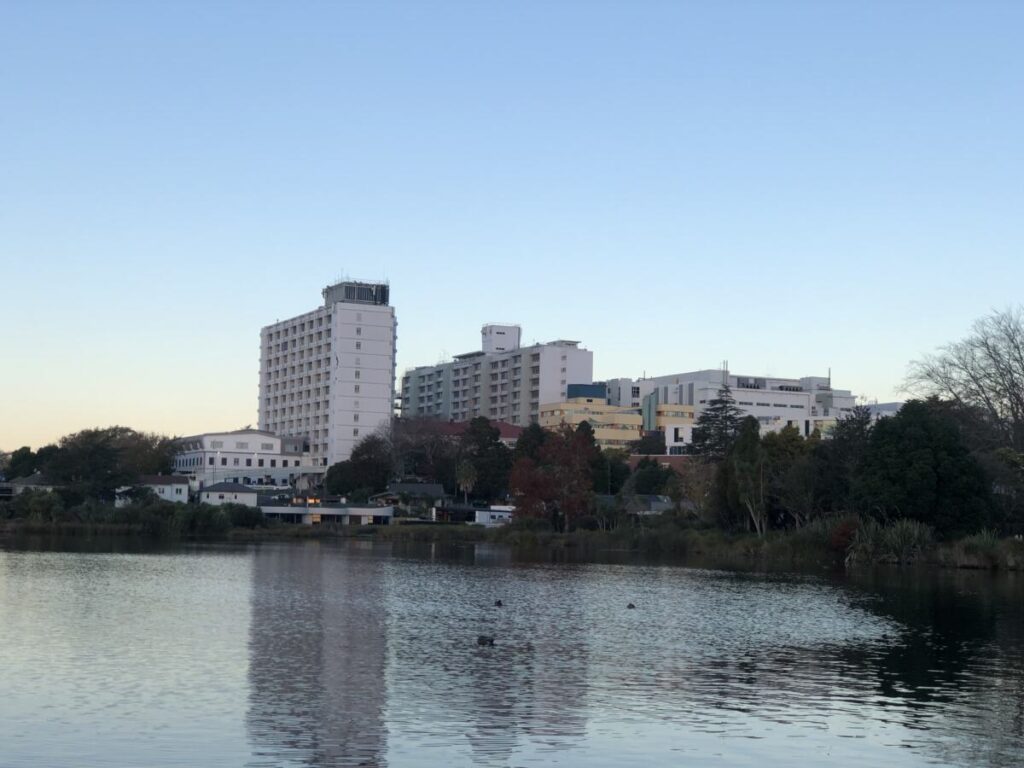
Waikato Hospital, view from the lake. Photo: Lachlan Eddie
He grew up in a rural village where living a better life was a constant struggle. He moved between schools – Anuta, Marogu, Apupiru – before completing Standard Six at Anuta Primary School.
One of his early leadership roles was being elected head boy in Standard Six at the beginning of 1985 at Anuta Primary School. “This was a huge role for me as a leader,” he said.
From primary school, he progressed to Waimapuru National Secondary School between 1986 and 1991, completing Forms 1–5. Saeniasi said the school had just been completed at the end of 1985, so the batch of students who went there in 1986 were the first group to attend the newly built school.
He recalled that the first two years in secondary school were very tough because they had to do a lot of work every day after school to clear the bushes and rubbish around the school and plant flowers, fruit trees, coconut trees, and other trees to beautify the school.
In 1986, a huge cyclone damaged some buildings, and the school was closed for a few weeks, but after four years, all the flowers and plants had grown, and the school was beautiful.
For Saeniasi, the challenge was not the physical work or the damage caused by the cyclone but the financial burden of school fees.
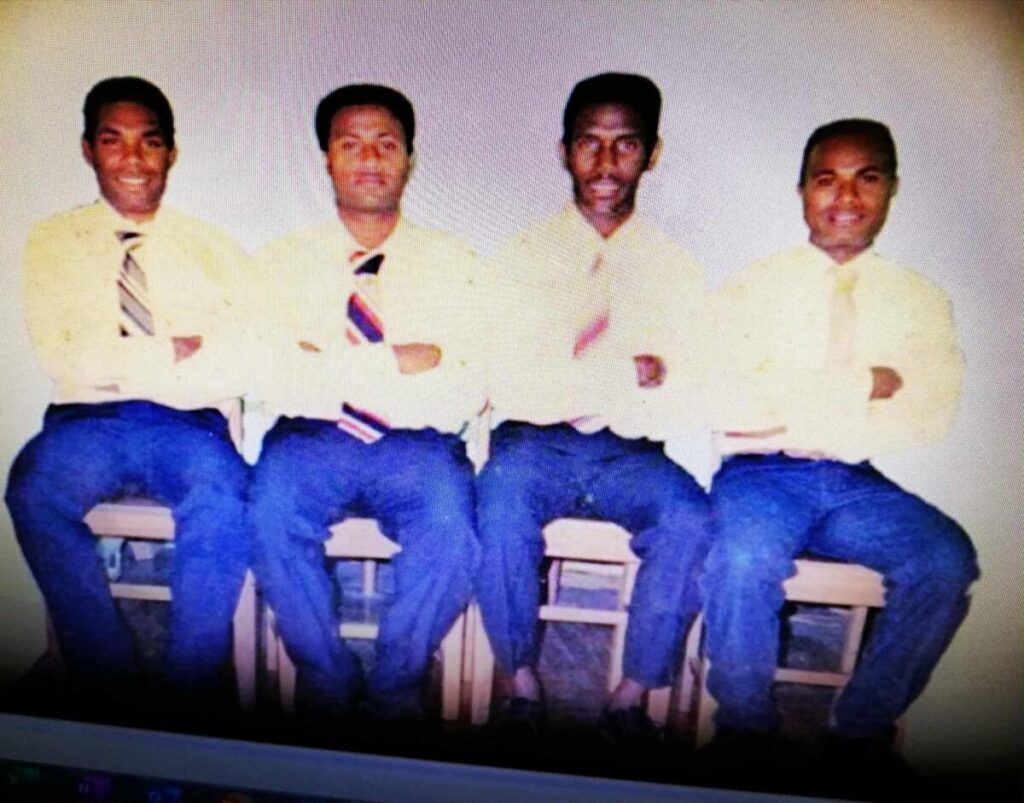
From left: Rockson Huto Saeniasi with his SICHE classmates after their 1993 graduation ceremony. Photo: Supplied.
“I come from a less privileged family,” he says. “Every holiday, I leave home and go to my mother’s side to make copra or dive for the Trochus maculatus sea snail.” The shells are a valuable resource, used to make buttons for clothing.
It is here Saeniasi said he forged his character “Some nights I stay alone in the plantation, cooking copra in the dark. It is tough, but it makes me strong.”
Despite financial challenges, he passed his Form Five national exams and earned a government‑sponsored scholarship to study nursing at the Solomon Islands College of Higher Education (SICHE). It was, the opportunity he’d prayed for.
He graduated in 1993, completed his probation at the National Referral Hospital (NRH), and became a registered nurse in 1995. Soon after, he was appointed to the surgical ward.
Another opportunity came in 1997 when the Nursing Director appointed him to replace an anaesthetic nurse who had been terminated for misbehaviour. The new role as an anaesthetist was different, but after six months of training, he mastered it.
He was then selected to do an anaesthetic technician training attachment at Waikato Hospital – a turning point that changed his destiny, and an opportunity he said he took “with both hands.”
In August 1997, he arrived in New Zealand to work as an Anaesthetic Technician for a six‑month work experience programme. The advanced technology, pace, and environment overwhelmed him, but he relied on his faith and work ethic.
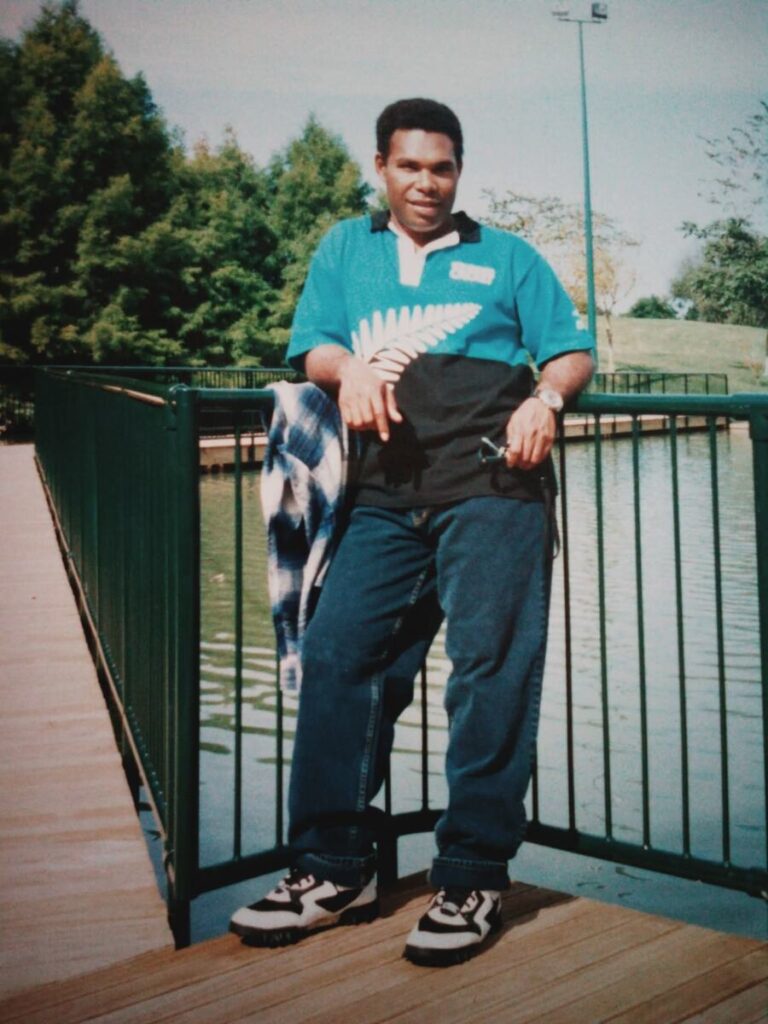
Rockson Huto Saeniasi at Hamilton Gardens during his first attachment programme in 1997. Photo: Supplied.
“I am worried because everything is different, very high tech. But the staff are so supportive. I cherish that forever.”
His placement was extended to nine months, and when he returned to the Solomon Islands in 1998, he carried new skills and confidence to support NRH.
But his optimism was quickly tempered. When he returned, the country was entering one of the darkest periods in its history, the ethnic tension between the Malaita Eagle Force and Guadalcanal (Isatabu) militants.
Hospitals were under‑resourced, staff were harassed, and salaries were delayed for months. “We miss three to four payments. My family survives on my wife’s salary,” he says. “Many nurses go back to their islands. I have no choice but to stay.”
He recalls one memory that still haunts him. “Two Malaita Eagle militants come into the hospital fully camouflaged and shoot two 17‑year‑old Guadalcanal boys recovering from surgery. I am one of the first to enter the room. The amount of blood is unbelievable, and they never survive. That experience gives me resilience and boldness.”
Despite the danger, he continued working. The Prime Minister assured staff that the government would evacuate them if things worsened. But Saeniasi was the only one left in his unit. “I feel like I have no choice but to continue to serve the nation.”
This continued from 1999 to 2001.
In late 2001, three years after his NZ placement ended, he received a call from his former boss in New Zealand offering him an Anaesthetic Technician job. Saeniaisi said this was “ unbelievable. A true blessing.”
He had no money for travel, so his boss sent funds to cover his expenses. On 1 January 2002, New Year’s Day, Saeniasi left his country with new hope for his career and family arriving at Auckland Airport full of excitement.
His flatmate, Dindar Peter, who is also from SI, was on his way to pick him up at the airport. But it was a little late, so Saeniasi became anxious and worried and boarded a shuttle bus without an address.
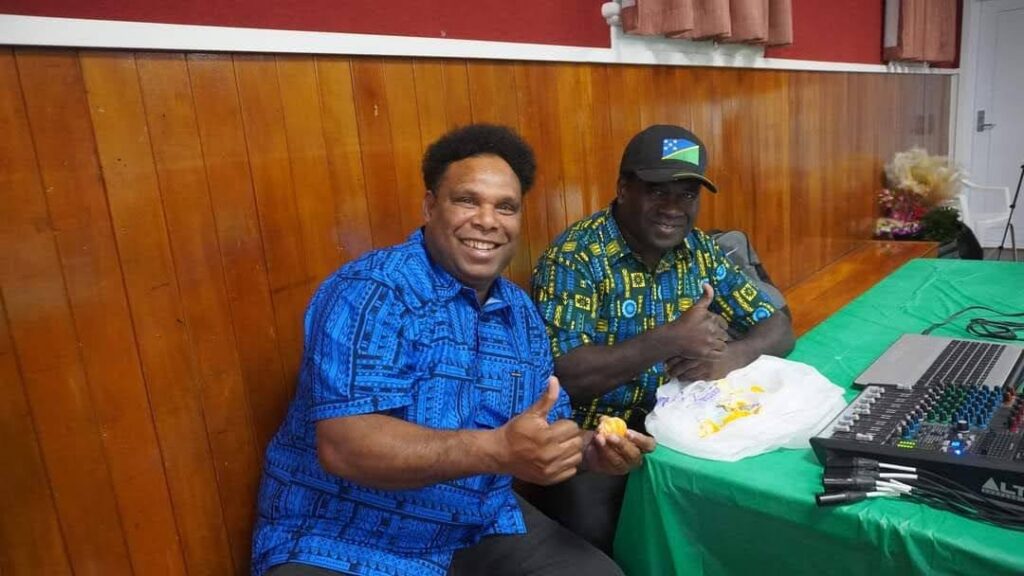
Rockson Huto Saeniasi and Dindar Peter at an event in Hamilton. Photo: Supplied.
He directed the shuttle to Waikato Hospital, walked straight to the operating theatre block, found a friend, and waited for two hours for his flatmate, Peter, to return from Auckland.
When Peter arrived, they went to their flat, where his boss came an hour later to meet him bringing some surprise support, “He gives me a large amount of money to keep me going before my first payday.”
He began his permanent role as an Anaesthetic Technician that same year, responding to emergencies. “It can be stressful, but it is always rewarding when everything goes well.”
Peter knew Saeniasi from their time working together at NRH and was part of the training scheme.
“I first met Rockson at National Referral Hospital in February 2000 to liaise with him before coming to New Zealand for training under the Pacific anaesthetic technician programme through Dr Hugh Spencer.”
He said that because Saeniasi was at Waikato Hospital in 1998, he got ideas from him about what they do there.
They still work together at Waikato Hospital’s Anaesthetic Department, serving for more than 20 years.
Describing their job, Peter says, “We anaesthetise patients for surgery, making sure they are comfortable pre‑ and post‑operatively as well.”
Peter recalled his favourite memories with Saeniasi were working together during life‑threatening operations, cardiac dissection repairs, and more.
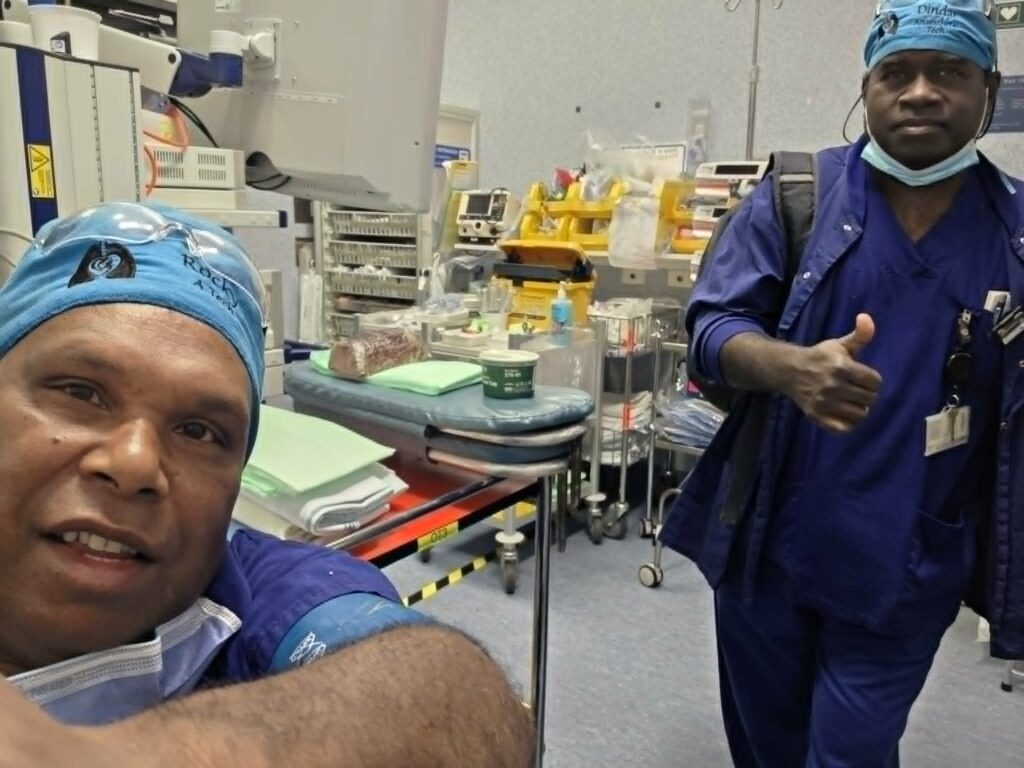
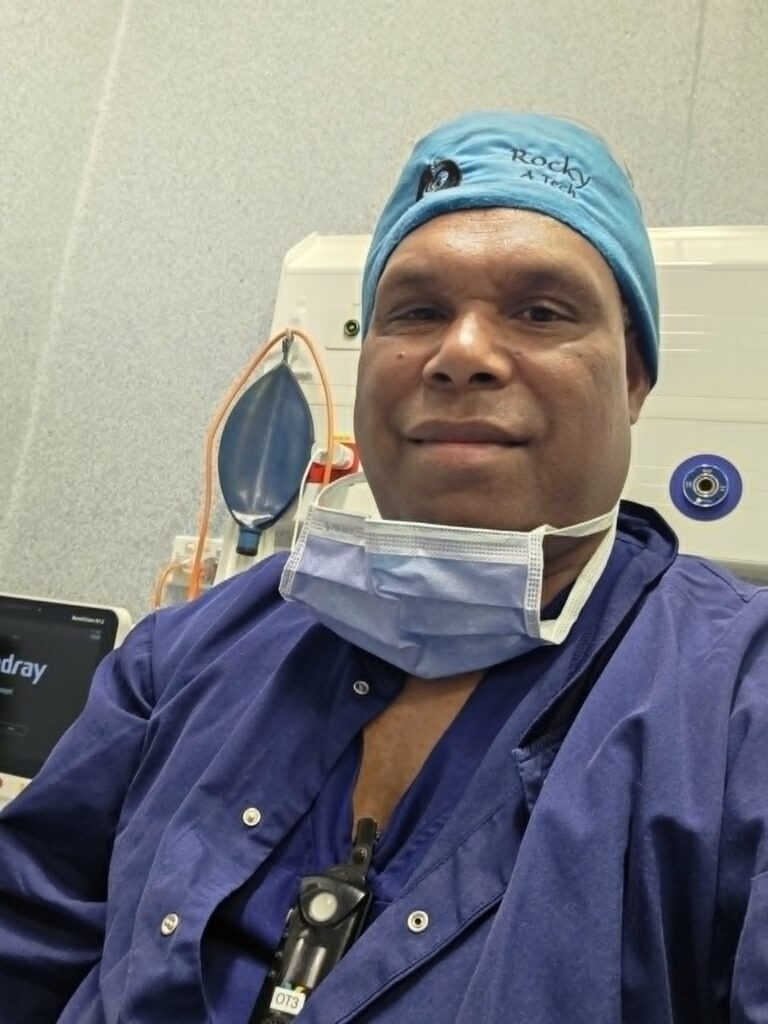
Rockson Huto Saeniasi and Dindar Peter inside Waikato Hospital. Photo: Rockson Huto Saeniasi (selfie).
One moment stands out for Saeniasi in his career: a long and complex operation to separate conjoined twins. “It is only the second time done in NZ. It is successful. I will never forget that.”
Saeniasi’s only son, Jeremy, also works at Waikato Hospital as a rotational physiotherapist.
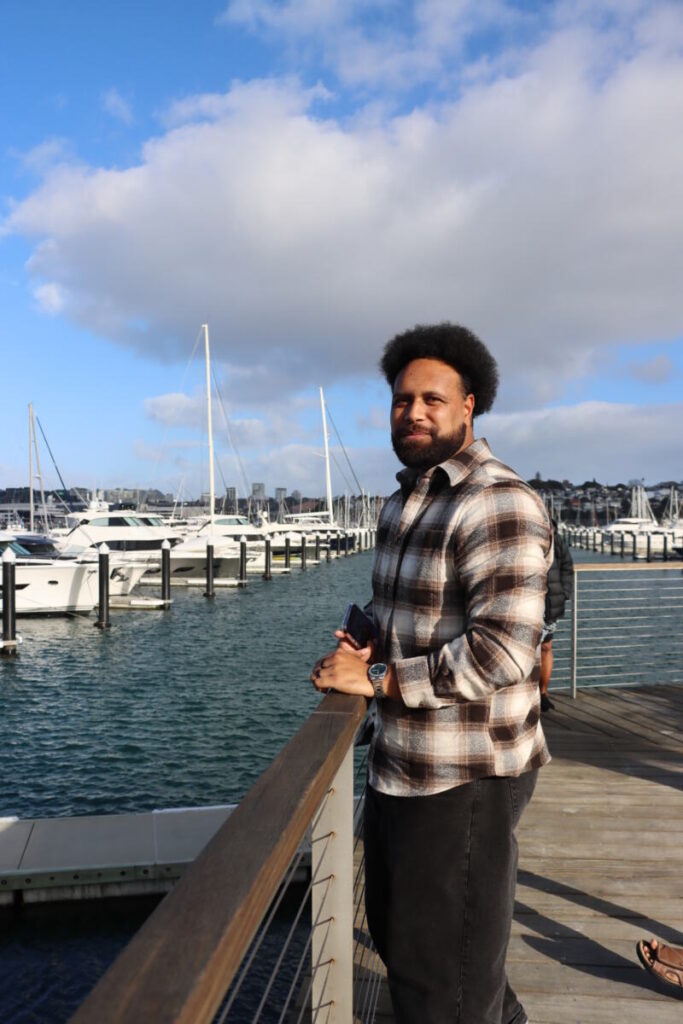
Jeremy Saeniasi. Photo: Aiden Kenilorea.
He describes his father as hardworking both at home and at work. He said his father is hardworking, humble, loves people, and always puts his family first.
“He is the type of person who gives up his last dollar to help someone in need.”
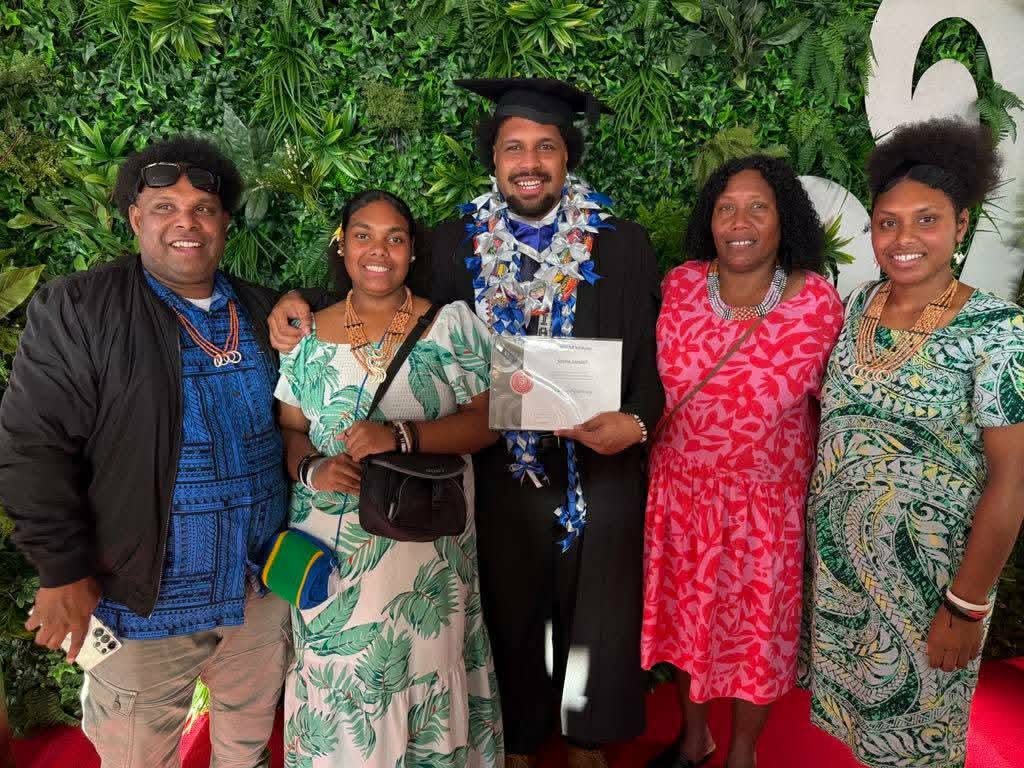
The family of Rockson Huto Saeniasi snapped a photo after the graduation ceremony of his only son, Jeremy Saeniasi. Photo: Supplied.
Jeremy recalled that his father was his biggest rugby critic but also his number one supporter.
“Even when I don’t agree with his feedback, I appreciate it because it shows he believes I can do better.”
While building his life in Hamilton, Rockson Huto Saeniasi never forgot his extended family in the SI and sees his support for them as both a responsibility and a privilege.
“I pay school fees, help buy pigs for weddings, petrol drums, and give money to fix outboard motors almost every month. Not just for my siblings but the whole extended family.”
He feels that through these remittances, he contributes to the Solomon Islands economy. Jeremy says, “While the odds were stacked against his father growing up in rural Makira, he provides a better life for their family because of his sacrifice and God’s guidance.”
Rockson Huto Saeniasi – a story of commitment, sacrifice, and perseverance.