

Politics: can young people find a place?
At 19, Bianca O’Keefe is old enough to run for Parliament – but some of the young people she hopes to represent aren’t old enough to vote.
Bianca O’Keefe has already knocked on the doors of about 5000 Waitākere homes campaigning for the electorate vote, with another 15,000 flyers on the way.
“They want your party vote,” the flyers read. “I want your electorate vote.”
The 19-year-old is standing for Parliament in Waitākere after running for the local board in 2025, and says young people need to get involved in politics before they are left behind.
According to Stats NZ, 74% of enrolled voters aged 18-24 voted in the 2023 general election.
“It’s time for us to get in the race because if we don’t do it now, we’re gonna be left behind and we’re never gonna have the chance to be a part of the conversation,” she says.
O’Keefe believes that Gen Z are not feeling optimistic about the future and need to be part of the solution
It’s time for us to get in the race because if we don’t do it now, we’re gonna be left behind and we’re never gonna have the chance to be a part of the conversation.
“We’re currently choosing what we want to do in university. We’re thinking about internships and we’re thinking about our jobs and what our future’s going to look like and unfortunately for most Gen Z, we don’t have hope for our future in New Zealand.”
She says the question of whether Gen Zers are able to buy a house is causing so many to go to Australia where they feel they do have a future.
O’Keefe’s experience reflects a wider challenge for young people trying to enter politics, says University of Waikato associate professor Dr Nick Munn, whose research focuses on young people and democracy.
He says that there are societal prejudices against young people in positions of authority.
“Young people (are) simply often not taken as seriously as older candidates by the general electorate,” he said.
“The percentage of the public who votes steadily increases with age, so the oldest demographics are the ones who are most likely to vote.”.

Munn said this means older voters are more likely to be worried about young candidate’s lack of experience or lack of practical wisdom
Only 2.8% of global MPs are aged under 30 currently, and 37% of parliamentary chambers worldwide have no MPs aged 30 or under, according to the Inter Parliamentary Union (IPU) (2026)
Munn admits there are some exceptions to this, noting Te Pàti Māori MP Hana-Rāwhiti Maipi-Clarke who was 21 when elected, just two years older than O’Keefe.
Associate Professor, Dr Nick Munn
New Zealand, the stats are slightly higher than the global average, with 4.1% of NZ MPs aged 30 years or younger at the time of the last election in 2023.
Following the UK’s July 2025 decision to allow 16- and 17-year-olds to vote in elections, there has been some calls for NZ to do the same.
Munn said New Zealand has considered lowering the voting age before. When MMP was introduced, the Royal Commission on the Electoral System recommended extending the vote to 16- and 17-year-olds.
“The recommendations of the Royal Commission pointed out that 16- and 17-year-olds are just as capable on average of making these kinds of decisions (in electing a government) as 18- and 19-year-olds,” he said.
“They also showed that there’s no meaningful difference between how good an 18- or 19-year-old is and how good a 40 year old is.”
But the recommendation was rejected.
Munn thinks the voting age should be lowered, pointing out that there are growing numbers of countries who have done this, particularly for local elections. He feels there is increasing evidence that the system doesn’t break when young people are allowed to vote.
“New Zealand tends to be quite slow to adapt these kinds of changes now,” Munn said. “We have a self conception as being a very liberal and adaptive country based on things like being the first country to let women vote, but that was now well over a century ago.
“The modern version of that is to let young people vote.”
But not everyone is in agreement. Jenna Brown, 19, a nurse in training at the University of Auckland, has a totally opposite view. She says that, at 16, you don’t even know half of what’s going on in politics.
“They don’t teach you that in school, so I don’t think it’s worth (lowering) the age for people that don’t know what they’re voting for.”
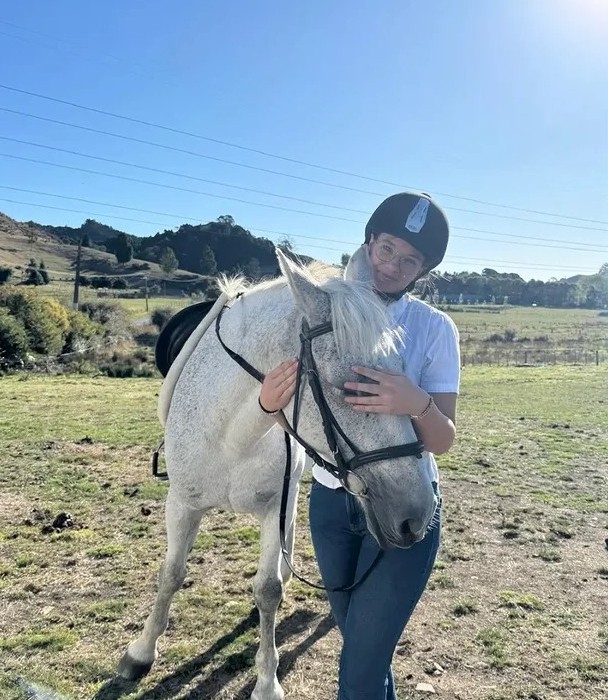
She says that, if the voting age was lowered, the results on the voting paper would not be a reflection of their personal beliefs, instead it would just be what their parents want, or who their friends will be voting for.
Brown says that when patients see a young nurse, they will much rather have someone older give them their pills.
As for someone young going into politics, Brown says that it would depend on the person’s knowledge of politics, and if they have enough understanding, they should “go for it.”
O’Keefe echoes that, saying people might regret it later if they don’t do it now.
“If you don’t do it and you don’t make the effort to give it a go, you’re just going to be living a life where you’re going to be like “I regret not trying that.”’