

Being patient and growing slowly: A bonsai’s second life
For Hamilton Bonsai Club president Steve Loveridge, each tree is an unfinished masterpiece, with each owner bringing a new vision to the tree.
For 25 years, the rhododendron lived in an old copper on his grandmother’s patio. When she moved away in her nineties, the tree was planted at the entrance to his parents’ farm. Then his parents decided to move off the farm, so Steve asked them for permission to dig it up.
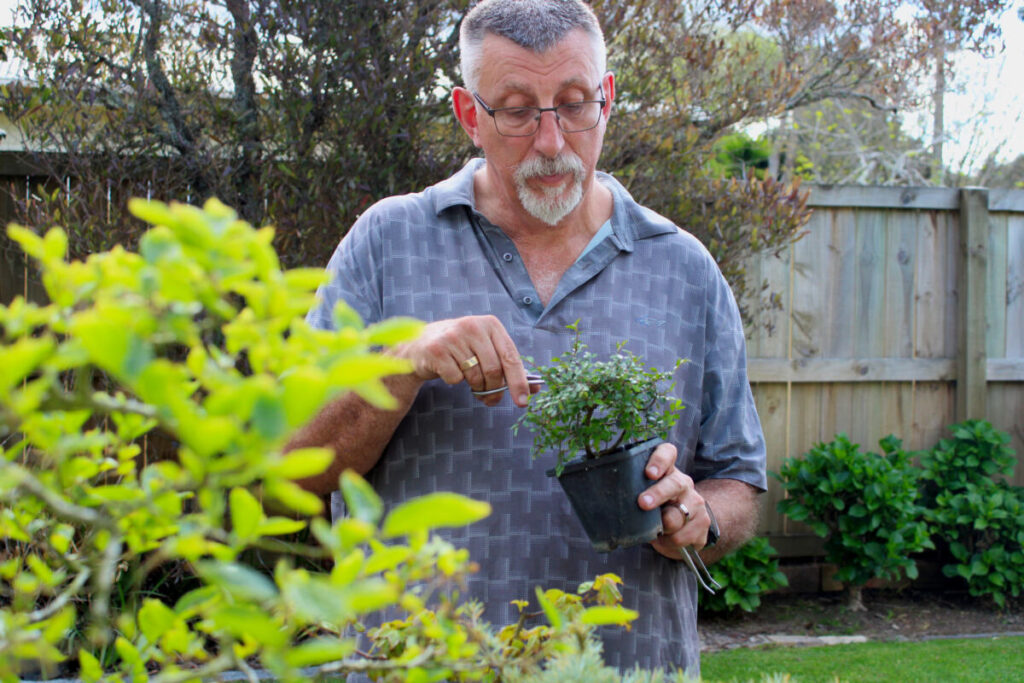
For him, it was not a small thing to do. He said, “It was four metres tall, so that’s taller than where my roof is on my house, and it was amongst a whole lot of other trees, so I had to dig it out of the ground.” It took more than three months to gradually dig up and prune the tree to avoid shocking it.
“I used to have a large collection of orchids, like 200 different types of orchids, and eventually I needed to downsize that.”
steve loveridge
But at long last, the first green shoots finally broke through. Right now, the rhododendron is about 60 centimetres, and it’s actually flowering.
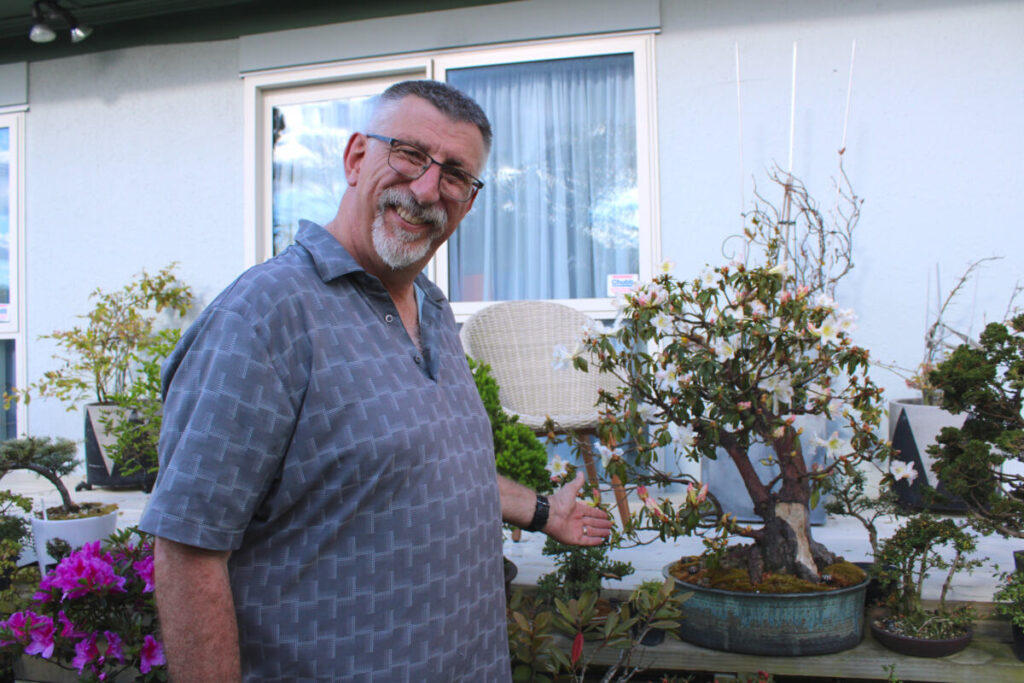
Steve Loveridge has been a club president of the Hamilton Bonsai Club for three years and has been part of the club for six years. He has around 120 bonsai trees currently in the shaping process in his garden in the centre of Hamilton. Most people are walking past and have no idea they are there because from the street there is not much to see.
Before taking up bonsai, Steve worked extensively with forestry, fruit trees and other horticultural projects. “I used to have a large collection of orchids, like 200 different types of orchids, and eventually I needed to downsize that. I didn’t have the time for it or space. ” He has always been passionate about bonsai, searching for a way to slow down and embrace a slower lifestyle. So, he applied everything he knew about trees to style them.
“A bonsai is never really finished. It’s always in development because different people see different things at different stages.”
steve loveridge
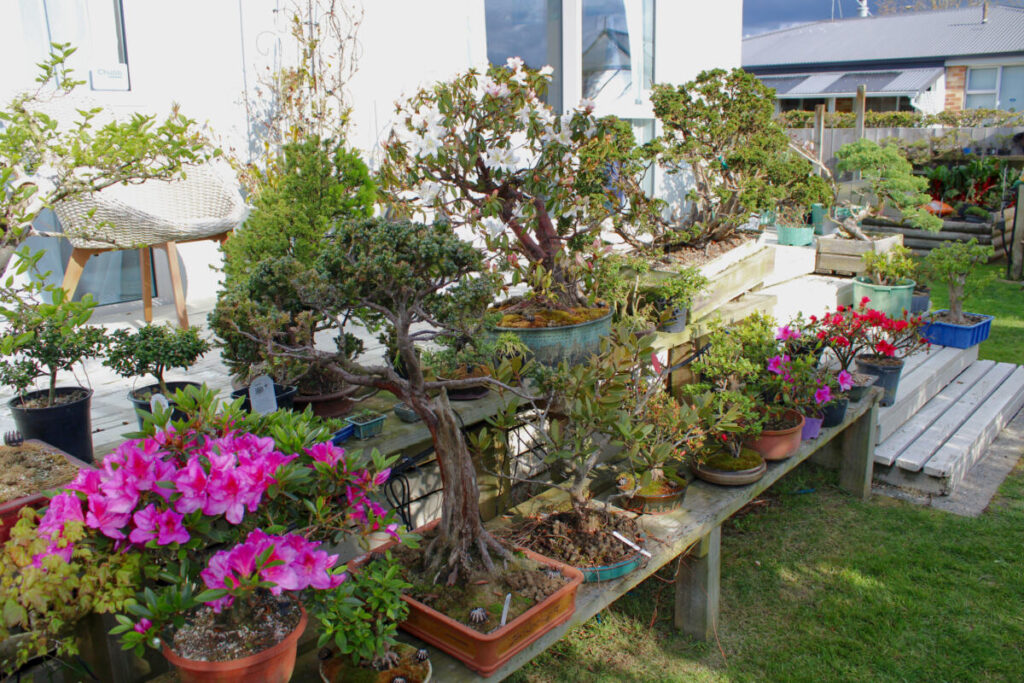
Only six to eight are exhibition-quality, he says. He wants to personally train and grow each and every tree by himself. The garden is where he is relaxed and spends some time for him.
A tree can take on a whole new look in a new artist’s hands. Steve owns some trees that he has obtained from previous owners who could no longer take care of them due to age and illness, and he said they look completely different now.
“Some of the oldest bonsai are getting up over 800 or 900 years old. We don’t have that here in New Zealand, but there are trees that are up around 70 or 80 years old as a bonsai already in New Zealand.”
He thinks that most of us are way too caught up in work, social relationships, phones, and technology, and “we need to actually switch off from electronics and contemplate something about nature”, he says.
The club started in 1984; the first meetings were held at Hamilton Boys’ High School. More than 40 years later, members still gather on a Sunday each month in Hamilton Garden, and they can borrow from the club’s library of bonsai books and magazines.
If a tree could talk, Steve thinks it would say its life has turned a new, better page since coming to him. He jokes that even his cat gets jealous, feeling like the trees get way more spoiled than she does.
Find out more: Interested in learning about the art of bonsai? Watch this video and explore bonsai growing, club meetings and upcoming events through the Hamilton Bonsai Club website.