


Sanctuary Mountain on high alert
By Paul Michael
Five Takahe’ will be vaccinated at Sanctuary Mountain, Maungatautari as a precaution against H5N1 bird flu, which entered Aotearoa/NZ on July 15.
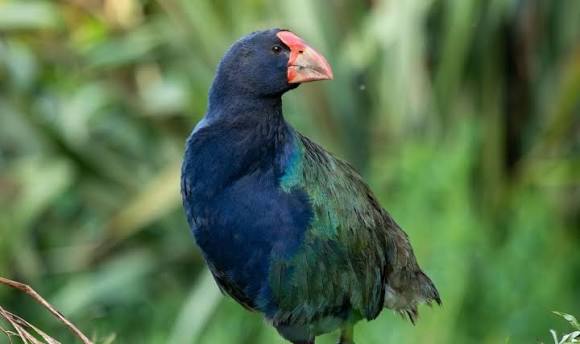
The vaccinations will be carried out by DOC (Department of Conservation)staff and will involve the birds being injected with the vaccine.
Sanctuary Mountain has 35 bird species (23 native, 12 introduced) and the bird population is estimated at around 3000 because birds are not tracked.
Nationally there will be five bird species targeted for vaccination, kākāpō, takahē, tūturuatu/shore plover, and kākāriki karaka which gives 6 months protection and Kakī / Black Stilt with 3 months protection.
The bird flu preparation budget has been revealed through the OIA (Official Information Act) to be NZ$73,000 and boosters will be available if required.
The H5N1 strain of bird flu is extremely contagious and deadly to bird populations, especially flocking birds such as commercially farmed poultry and coastal birds.
Dan Howie the Operations Manager at Sanctuary Mountain said that, “we have good strategies and systems in place for these kinds of problems in New Zealand through MPI (Ministry of Primary Industries) and DOC.”

Howie lives in Ohaupo with his family and has worked at Sanctuary Mountain for 8 years and has a degree in Biological Sciences from the University of Waikato. He and his team carry out all the work in the field which consists of the care and maintenance of the birdlife, pests and fences.
He explains,” we are fortunate in NZ to have the benefit of distance, which has given us time to observe the affects the bird flu is having on bird populations, overseas.”
‘Sanctuary Mountain, Otorohanga Kiwi House and Hamilton Zoo are following the lead from MPI as to what moves they should make, such as which birds should be vaccinated.

Howie’s advice to the public is to, “report groups of dead or dying birds to the NZ exotic pest and disease division of MPI, and please do not touch them.”
He adds that, “this is because even though the transference to humans is extremely low, the risk is there and it also makes bird populations more vulnerable.”
Dan envisions that there will be campaigns to gain public attention on H5N1 in the near future, provided by MPI and DOC and will be on all major media channels including TV, radio and YouTube.
Latest daily information about the bird flu in Aotearoa/NZ can be found at,
Reports can be made to – 0800 80 99 66
You can also contact,
https://www.healthnz.govt.nz/health-topics/conditions-treatments/infectious-diseases/avian-influenza
or phone – Healthline 0800 61 11 16 if you are feeling unwell after coming in contact with a dead or dying bird.